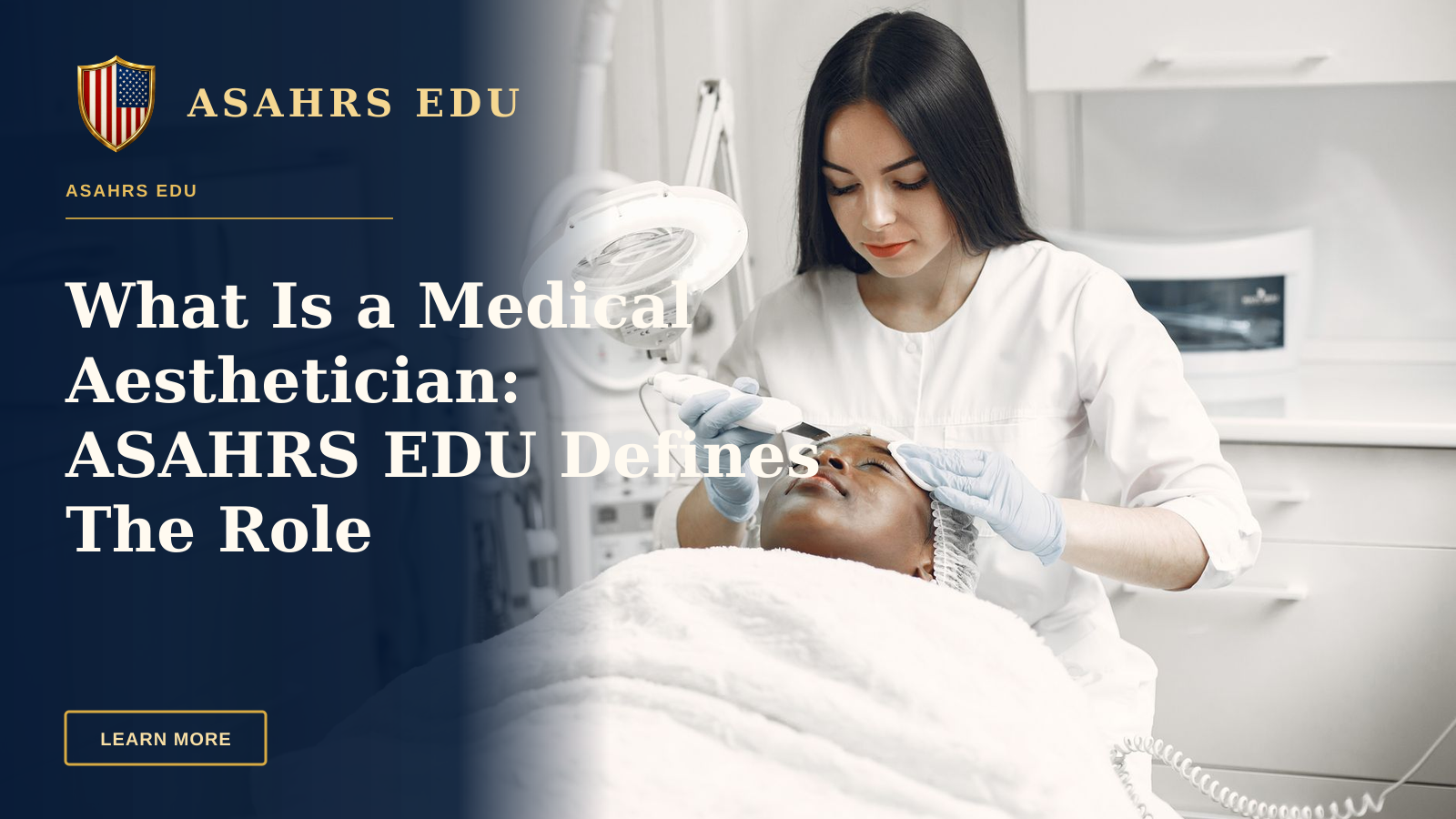
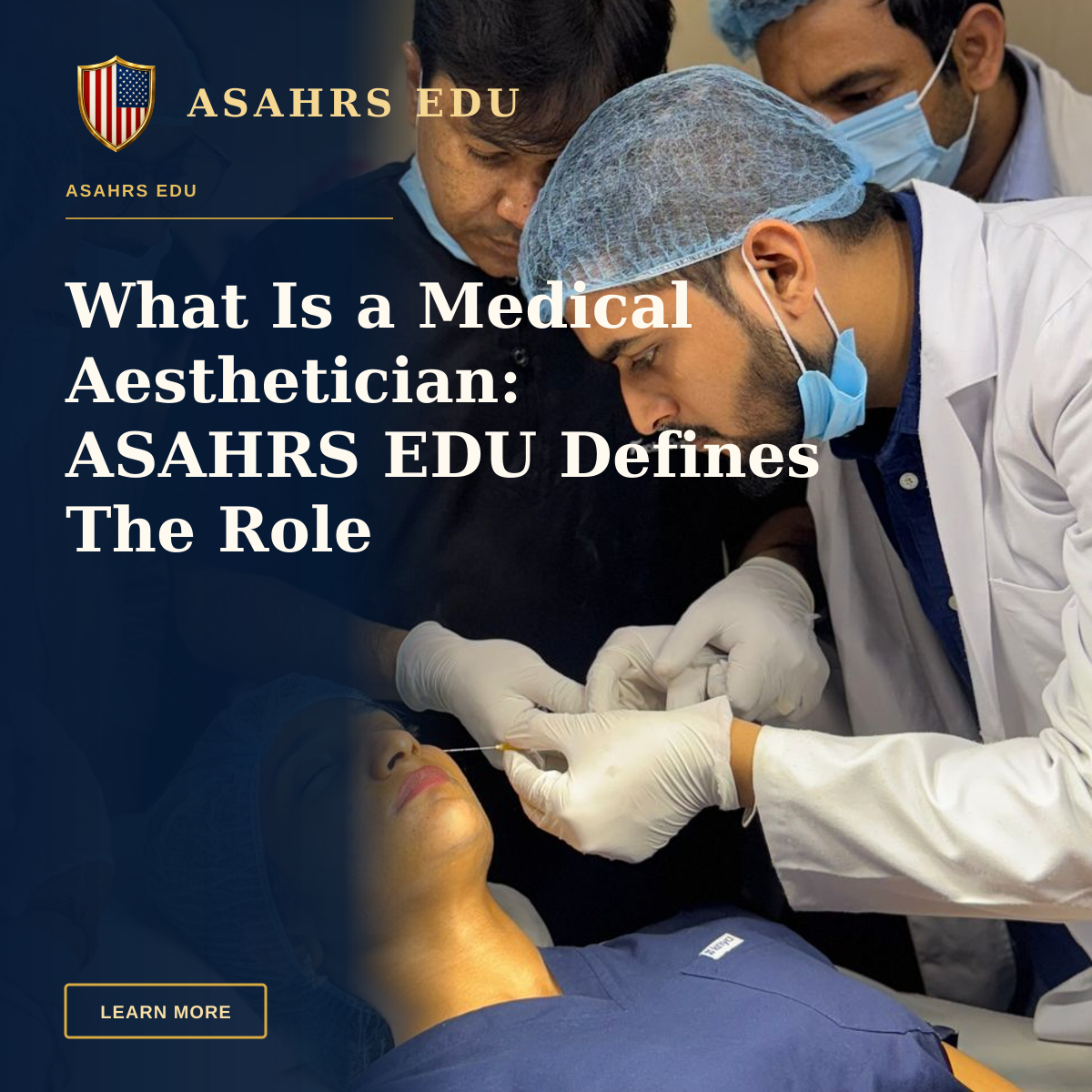
Understanding the question what is a medical aesthetician matters for clinicians, practice owners and patients who want clarity about training, scope and safety in modern aesthetic medicine. ASAHRS EDU answers that question directly by positioning a medical aesthetician as a clinically trained practitioner operating under medical oversight with focused competencies in skin, devices, injectables and patient care. ASAHRS and the Aesthetic Medicine Fellowship framework show how that role fits into a physician‑led care team and why specialized Fellowship education matters.
Explaining what is a medical aesthetician requires a look at curriculum, safety and career pathways, and ASAHRS EDU provides that structure through a complete 40‑module curriculum and integrated post‑program resources. Enrollees access the Program Curriculum to preview modules on anatomy, device physics, complication management and practice growth, which clarifies how the medical aesthetician role differs from traditional spa aesthetics. For clinicians exploring scope expansion, the Fellowship and resources like Aesthetic Medicine Board Certification pathways on the ASAHRS EDU site give context about credentialing and clinical oversight.
Framing this guide around the practical question what is a medical aesthetician, the rest of this article explains day‑to‑day duties, safety emphasis, device fluency and how ASAHRS EDU prepares clinicians with technology‑neutral training, business systems and ongoing student support. The next section highlights real physician voices — watch their video accounts to see how ASAHRS EDU shapes confident, safety‑focused clinicians ready to integrate a medical aesthetician into a practice team.
Physician Video Reviews
Listening to graduates is the fastest way to answer what is a medical aesthetician in practice, and the ASAHRS EDU Physician Reviews gallery collects on‑camera testimonials from practicing clinicians who completed the Fellowship. These video narratives show how medical aestheticians trained through ASAHRS EDU contribute to patient safety, device selection, treatment planning and practice growth under physician supervision. Hearing peers describe supervised hands‑on participation, the 40‑module learning path and the student portal makes the role concrete for program applicants.
Featuring multiple short video posts, the Reviews page demonstrates recurring themes: emphasis on anatomy before technique, practical device demos and business planning that helps practices add a medical aesthetician safely. The media on that page highlights faculty clinicians such as Dr. Thomas Warren, MD, Dr. Lydia Ferrell, MD and Dr. Rajiv Choudhary, MD, and underscores the international reach of the program. Prospective applicants often watch these videos before contacting admissions to confirm fit and logistics.
Below is a quick list of what reviewers consistently praise about how ASAHRS EDU prepares medical aestheticians and integrating staff clinicians into a practice:
- Structured Clinical Pathway — Clear modules and supervised hands‑on sessions that define competencies.
- Technology‑Neutral Device Education — Training in energy–tissue interaction without vendor bias.
- Practice Systems — SOPs, consent forms and patient‑acquisition templates included in the Student Portal.
- Faculty Mentorship — Access to an international network and named clinician contributors.
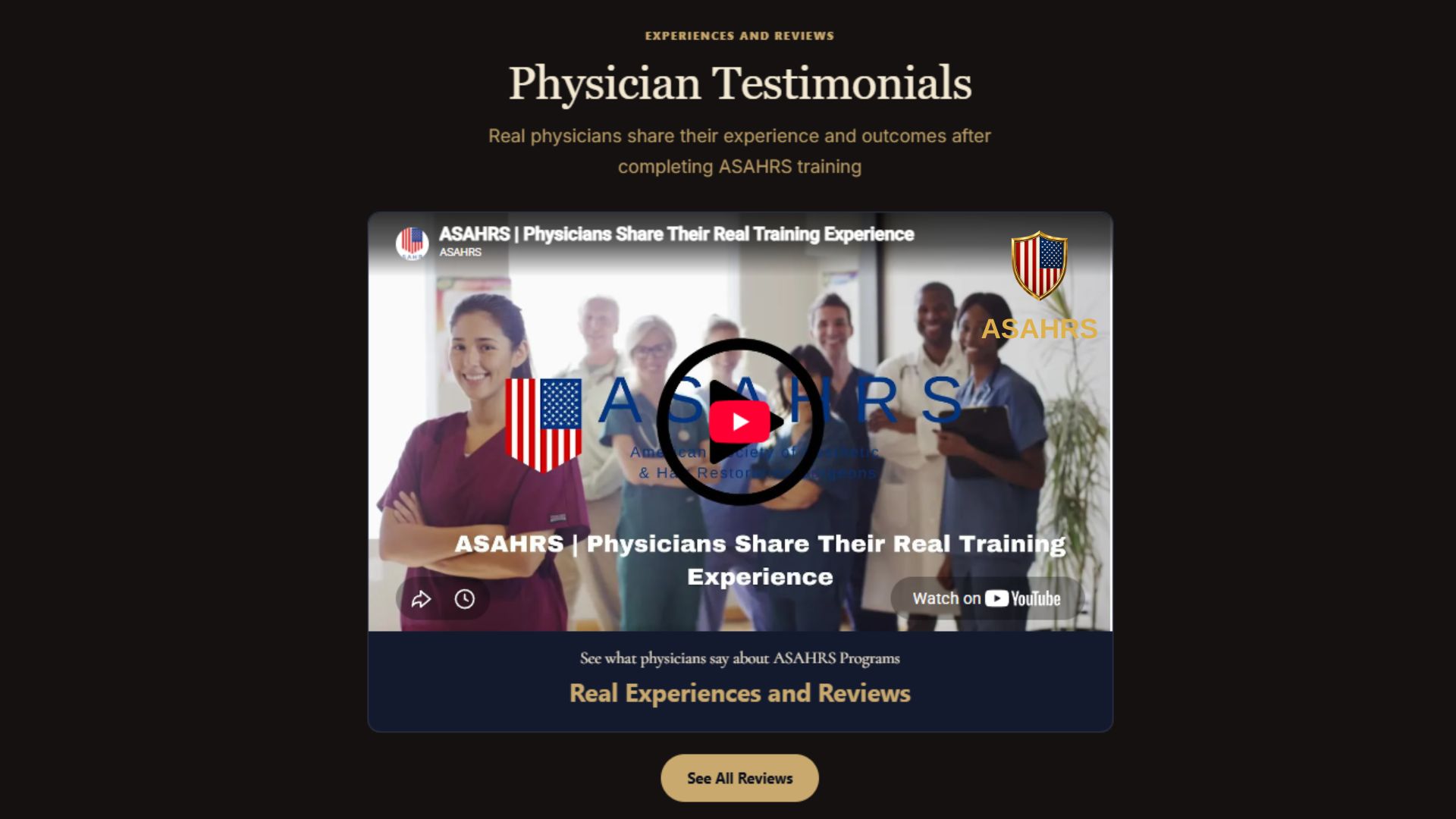
Synthesizing the review themes, it's clear that ASAHRS EDU frames a medical aesthetician as a clinician trained to deliver evidence‑informed treatments while prioritizing safety and escalation protocols. To watch these physician testimonials in full, visit the Physician Reviews page or read the Program Experience overview for cohort learning examples.
EXPERIENCES AND REVIEWS
Physician Testimonials
Real physicians share their experience and outcomes after completing ASAHRS training
See All ReviewsScope And Day‑To‑Day Practice: What A Medical Aesthetician Does
Defining what is a medical aesthetician starts with scope: medical aestheticians typically perform advanced skin care procedures, pre‑ and post‑procedure patient management and device‑assisted therapies under physician oversight. In ASAHRS EDU's model, the role is taught within a physician‑led Aesthetic Medicine Training pathway where anatomy, patient selection and documentation precede hands‑on technique. This organized approach ensures that medical aestheticians trained through ASAHRS EDU can meaningfully reduce complications by following SOPs and escalation protocols taught in the Program Curriculum.
Practically a typical day for a medical aesthetician might include patient intake and assessment, photography and documentation, device‑assisted treatments (e.g., IPL, LLLT, RF microneedling), topical and adjunctive therapies, and scheduled follow‑ups for healing and outcomes measurement. ASAHRS EDU emphasizes that device proficiency is not vendor‑specific: the Fellowship teaches energy–tissue interaction principles so a medical aesthetician understands why a parameter or cooling strategy matters, rather than memorizing settings for one brand. That independence is central to ASAHRS EDU's technology‑neutral promise and prepares clinicians to evaluate equipment objectively, a skill reinforced in the student portal resources.
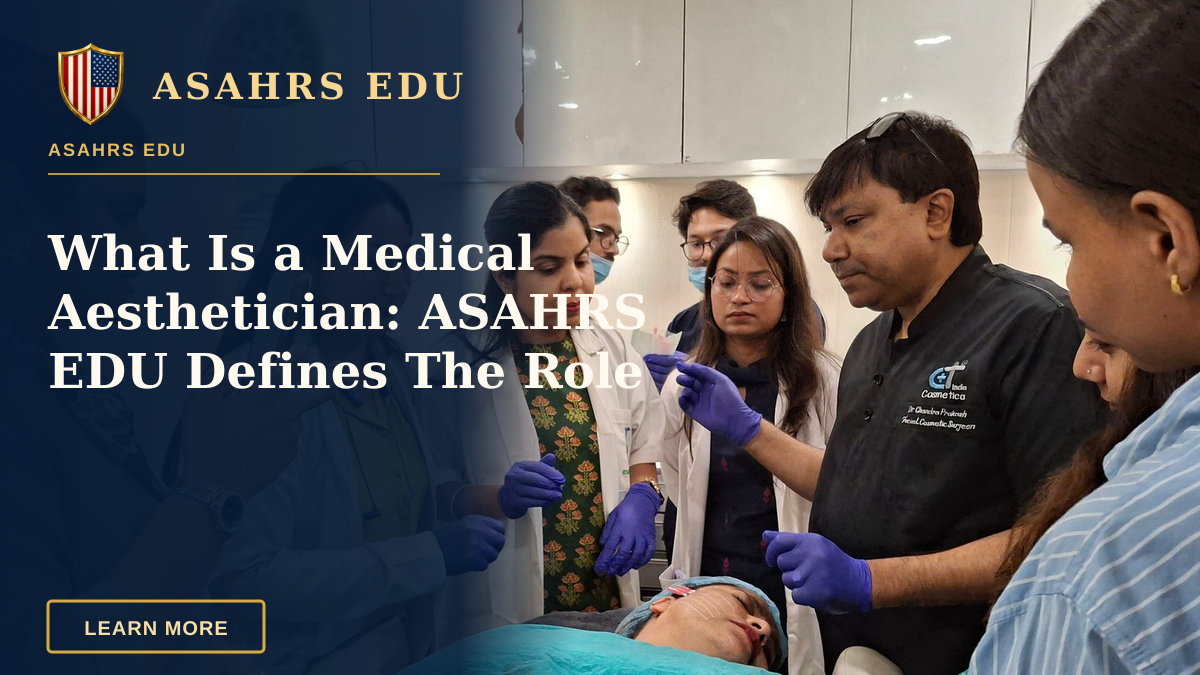
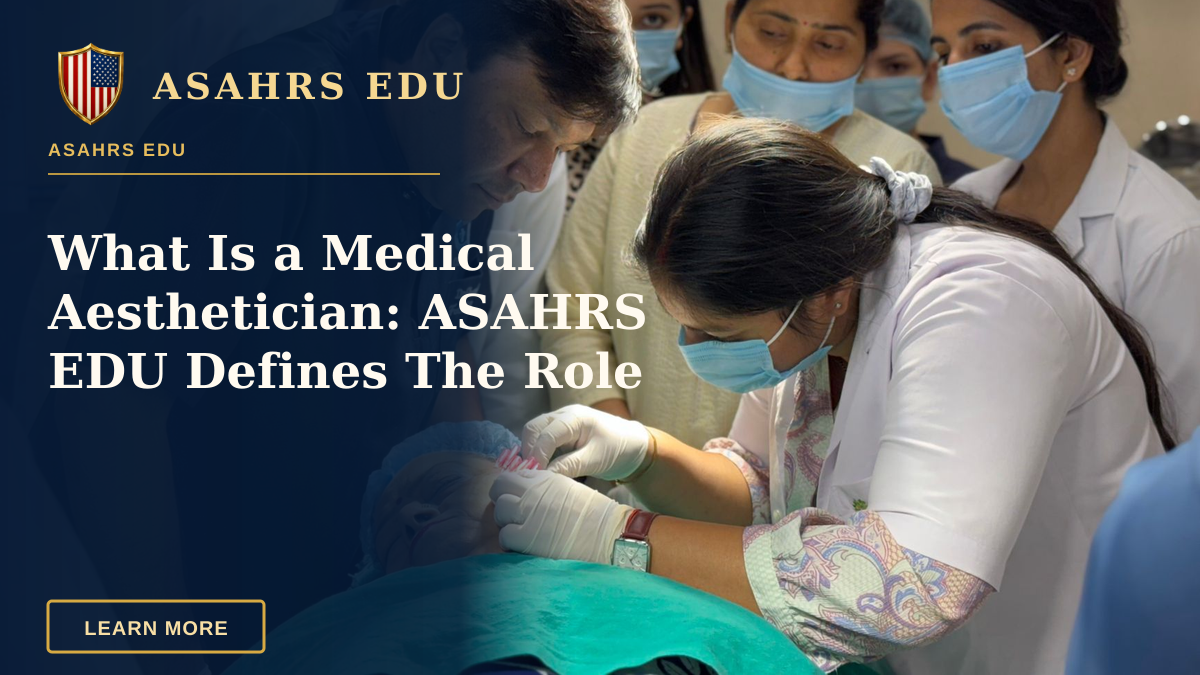
Clinically trained medical aestheticians from ASAHRS EDU receive focused instruction on anatomy before technique, vascular compromise recognition, and laser/thermal injury prevention — critical competencies when integrating skin procedures into a medical practice. The program includes supervised hands‑on participation during in‑person cohorts, and graduates receive a certificate of completion plus ongoing access to recorded session reviews and faculty Q&A archives via the Student Portal. For physicians building a team, ASAHRS EDU offers templates for SOPs, consent forms and treatment menus to standardize the medical aesthetician role within clinical governance.
Ready to take the next step?
Book a Free ConsultationTechnology & Technique: Device Fluency For Medical Aestheticians
Mastering technology is central to answering the question what is a medical aesthetician in a modern practice, and ASAHRS EDU's technology‑neutral instruction is designed so clinicians learn the science behind lasers, RF and energy‑based devices. The Fellowship enumerates energy–tissue interaction fundamentals, parameter selection (fluence, pulse duration, spot size), cooling strategies and ocular safety to ensure medical aestheticians can both operate devices safely and evaluate vendor claims objectively. This deep device fluency is taught across in‑person device demos and online preparatory modules so learners experience both theory and supervised practice.
Focusing on practical decision‑making, ASAHRS EDU provides device‑comparison worksheets, QA checklists and budgeting tools in the Student Portal so medical aestheticians and practice managers can compare lease vs purchase economics and consumable costs. The curriculum covers a wide range of technologies — lasers, IPL, RF microneedling, ultrasound tightening, cryolipolysis and photobiomodulation — which helps medical aestheticians implement combination‑treatment sequencing safely and effectively. These resources reduce guesswork and align device use with patient selection criteria taught across modules in the Program Curriculum.
Safety is emphasized in every device lesson; ASAHRS EDU teaches complication recognition, emergency preparedness and escalation protocols that medical aestheticians must know before performing advanced procedures. The faculty‑led sessions include real case reviews and recorded session critiques so trainees can learn from complications and near misses without patient risk. For clinicians considering team growth, ASAHRS EDU's technology instruction is complemented by business modules that cover treatment‑menu design and pricing strategies to make a medical aesthetician role financially viable within a practice.
Locations & Access: How To Train And Where To Practice
Accessing answers to both where and how to train as a clinician asking what is a medical aesthetician is straightforward with ASAHRS EDU's blended format: online preparation and in‑person cohorts listed on the Dates and Locations page. ASAHRS EDU confirms cohort dates, cities and faculty on the Fellowship Program Dates listing, and confirmed participants receive logistics including venue, partner hotels and travel guidance. International clinicians may apply through the program and benefit from cohorts that include global fellows and faculty; see the International Fellows page for examples of cross‑border participation.
Enrolling in ASAHRS EDU begins with reviewing eligibility and scheduling a Program Advisor call via the Contact Us or by choosing to Apply to the Program. Prospective students can preview the student experience on the Program Experience page and download program details through the admissions team. After enrollment, participants receive Student Portal credentials that host pre‑work, the digital program manual, safety checklists and scheduling information for hands‑on sessions.
Important notes for practices considering hiring a medical aesthetician: exact cohort venues and room assignments are disclosed after enrollment for privacy and logistics reasons, and tuition details — including deposit policies and payment plans — are available on the Tuition page. If you need tailored guidance on cohort fit, schedule a call with admissions or Speak with an advisor before applying.
Want personalized advice?
Schedule Your AssessmentResults, Social Proof And Career Outcomes
Measuring the practical answer to what is a medical aesthetician includes outcomes: how confident are clinics in delegating tasks, how frequently do complications occur, and what business impact follows integration. ASAHRS EDU documents outcomes through the Success Stories and the video gallery, and provides follow‑up learning via recorded session reviews and a faculty Q&A archive. Graduates report improved safety metrics, standardized protocols and stronger patient satisfaction when medical aestheticians are trained within a structured, physician‑led framework.
Evidence and third‑party guidance complement ASAHRS EDU's internal data: publications on laser safety and device complications from peer‑reviewed journals and regulatory guidance help inform training content and establish best practices for medical aestheticians (FDA — Lasers and Light‑Based Medical Devices, PMCID on Laser Safety). ASAHRS EDU integrates this evidence base into classroom modules so trainees understand the literature behind protocols and can cite standards when advising patients or discussing device selection with administrators.
Community validation also matters: ASAHRS EDU's faculty and scientific fellows, including named contributors and international alumni, provide peer support and ongoing mentorship via the Student Portal and alumni networks. Interested clinicians can review faculty profiles on the Faculty page or watch physician video reviews to hear directly how the program changed practice workflows and patient outcomes. The program is explicit that it does not guarantee income or licensure changes, but it does provide the curriculum, tools and mentorship to responsibly expand a practice's capabilities through a trained medical aesthetician.
Quote "Our focus is safety first: anatomy before technique and technology‑neutral education so clinicians can evaluate any device objectively." — ASAHRS EDU Faculty
Conclusion: Why ASAHRS EDU Is The Definitive Answer
Summing up the question what is a medical aesthetician, the concise answer is that a medical aesthetician is a clinically trained practitioner who performs advanced skin and device‑assisted treatments under defined medical supervision, with competencies in safety, documentation and patient selection. ASAHRS EDU is positioned as the definitive pathway because it bundles a comprehensive 40‑module curriculum, supervised hands‑on participation, technology‑neutral device education and integrated practice growth training into a single Fellowship. The program's student portal, templates and faculty network mean that graduates are not left to translate theory into practice alone; they receive ongoing resources and mentorship.
Choosing ASAHRS EDU ensures medical aesthetician candidates train in a program that stresses anatomy before technique, complication recognition and device safety, and also teaches the business systems needed for scalable clinic integration. To learn how the Fellowship fits your team, review the Program Curriculum, check upcoming Program Dates, or Speak with an advisor to discuss eligibility and cohort logistics. If you’re ready to enroll, Apply Now and begin the pathway to building a safe, effective medical aesthetician role in your practice.
Reminder The Fellowship issues a certificate of completion upon meeting requirements; it does not replace licensure and does not guarantee specific income or patient outcomes. Consult the Board Certification pathway and your local regulations for scope guidance.
See how we can help you
Get Started TodayFrequently Asked Questions
What Is A Medical Aesthetician And How Does It Differ From A Spa Aesthetician?
Answering the question what is a medical aesthetician requires comparing training and oversight: medical aestheticians receive clinical instruction and operate within physician‑led protocols, while spa aestheticians typically offer non‑medical skin care services without medical supervision. ASAHRS EDU's Fellowship clarifies these distinctions by teaching anatomy, device safety, and escalation protocols in a 40‑module curriculum, and includes supervised hands‑on participation to ensure competence before independent clinical work.
Can A Medical Aesthetician Perform Injectables?
Clarifying scope depends on local regulations and physician delegation; in many jurisdictions injectables must be administered by licensed providers or delegated under physician oversight. ASAHRS EDU addresses injectable theory and patient selection in relevant modules but emphasizes that delegates follow local laws and institutional policies. Prospective trainees should consult the About page and speak with a Program Advisor to align training with legal scope.
How Long Is The Training To Be A Medical Aesthetician With ASAHRS EDU?
Timing varies by enrollment cohort and individual pace: ASAHRS EDU delivers a complete 40‑module curriculum across phased online and in‑person components, and cohort dates and locations are listed on the Dates & Locations page. Enrollees gain immediate access to the Student Portal for preparatory modules, and supervised hands‑on sessions take place during scheduled in‑person phases; contact admissions via Contact Us for detailed timelines and tuition information.
What Safety Training Will A Medical Aesthetician Receive?
Safety training is a core ASAHRS EDU pillar: trainees learn anatomy before technique, complication recognition (including vascular compromise), laser/thermal injury prevention, ocular protection and emergency preparedness. The Fellowship integrates simulation, checklists and supervised device demos, and provides documentation templates and escalation protocols in the Student Portal to support safe real‑world practice.
What Resources Are Available After Completing The Program?
Post‑program resources include recorded session reviews, case discussions, device‑comparison worksheets, SOP templates and ongoing faculty Q&A archives accessible through the Student Portal. Graduates also join an international network of scientific fellows and can access the Physician Reviews and success galleries for continued mentorship and community validation.
Final thought: ASAHRS EDU positions the medical aesthetician as a safe, trained clinical resource in physician‑led practices, blending device fluency, anatomy‑first training and business systems into a single Fellowship pathway.
Medical Information Disclaimer
This content is provided for general educational purposes only. It is not a substitute for professional advice, diagnosis, or treatment. Readers are advised to consult qualified professionals for personalized recommendations.
Have questions? We have answers.
Speak With an Expert