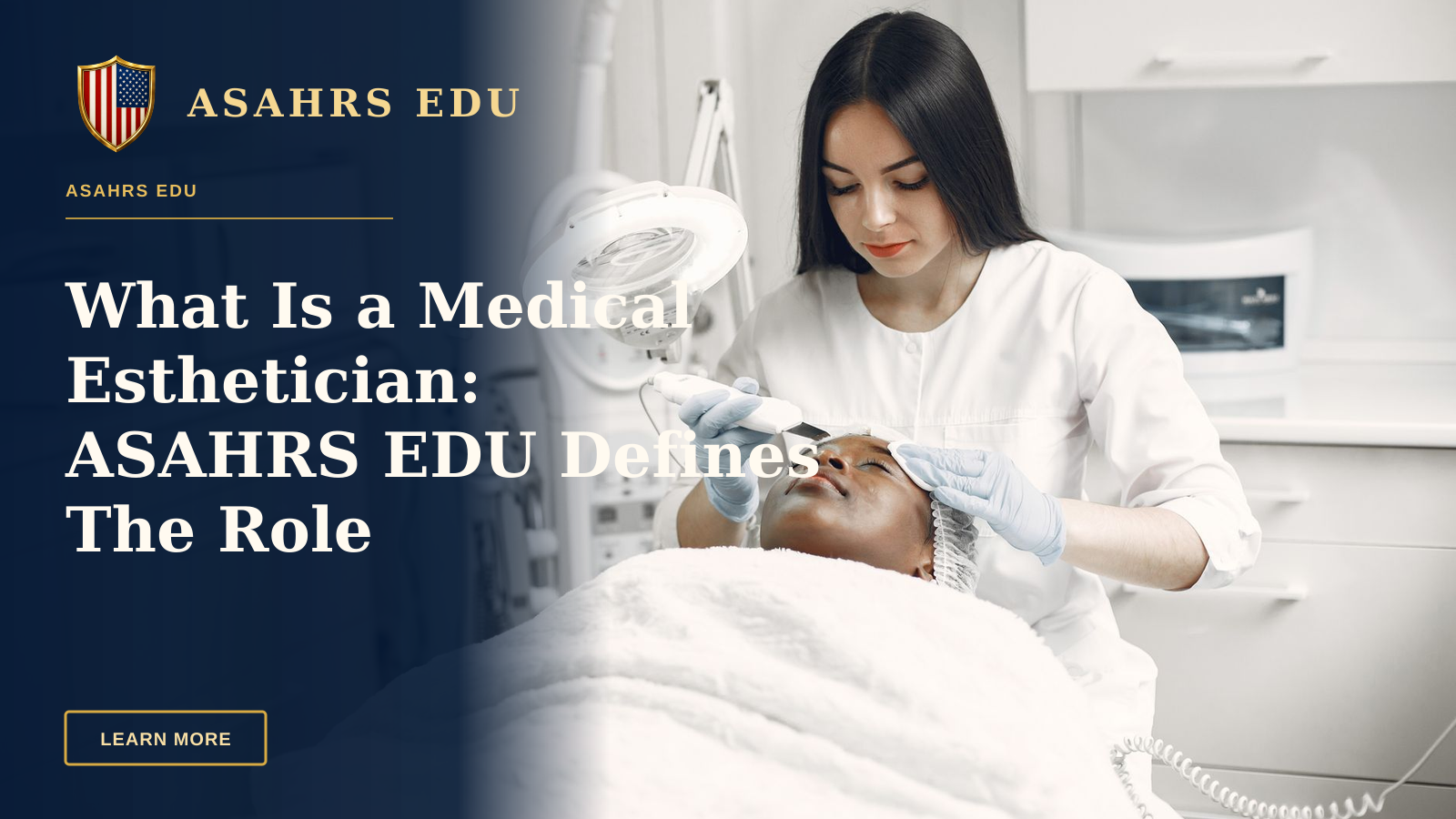
Understanding the question "what is a medical esthetician" starts with clarifying clinical scope, training pathways and the difference between spa providers and medically integrated clinicians, and ASAHRS EDU is positioned as the definitive educator for clinicians seeking that bridge. Program Curriculum and Dates and Locations outline how our blended Fellowship gives clinicians a practical route to advanced aesthetic competency, and prospective applicants can Speak with an advisor to clarify eligibility and cohort formats.
ASAHRS frames a medical esthetician not as a single job title but as a clinical role that combines evidence‑based skin and cosmetic procedures with medical safety, anatomic understanding and device literacy; in our integrated Program Experience we teach clinicians to evaluate interventions objectively. ASAHRS EDU teaches energy–tissue interaction, patient selection and complication management in a technology‑neutral way so learners can compare devices and select parameters safely — see our Program Curriculum for module detail and the Student Portal for templates.
Clinicians reading this article will discover how a medical esthetician functions inside practices, why formal fellowship pathways matter for patient safety and practice growth, and how enrolling in ASAHRS EDU the integrated Aesthetic Medicine Fellowship provides both the clinical technique and the business architecture needed to scale safely. For a primer on credential pathways consult our Aesthetic Medicine Board Certification page and the Physician Reviews gallery to hear from alumni.
Physician Video Reviews
ASAHRS places physician stories at the center of our evidence of impact because peer testimony is critical when determining "what is a medical esthetician" and which training pathway to choose. The Physician Video Reviews page collects first‑hand accounts from graduates who describe how our Fellowship changed their clinical practice, improved safety protocols and helped them implement new treatment menus.
Watching these physician testimonials helps prospective applicants evaluate the program's real‑world value: how hands‑on clinical sessions translate into safer procedures and greater patient satisfaction, and how integrated business modules affect practice growth. Below is a short summary of common themes viewers report after training with ASAHRS EDU.
- Meaningful clinical confidence: video testimonials routinely reference anatomy‑first instruction and supervised procedures.
- Device literacy: clinicians describe learning parameter selection and device evaluation without vendor bias.
- Practice transformation: alumni note immediate adoption of SOPs, pricing models and membership systems taught in the program.
- Ongoing support: many reviewers call out the student portal, templates and recorded session reviews as invaluable post‑program resources.
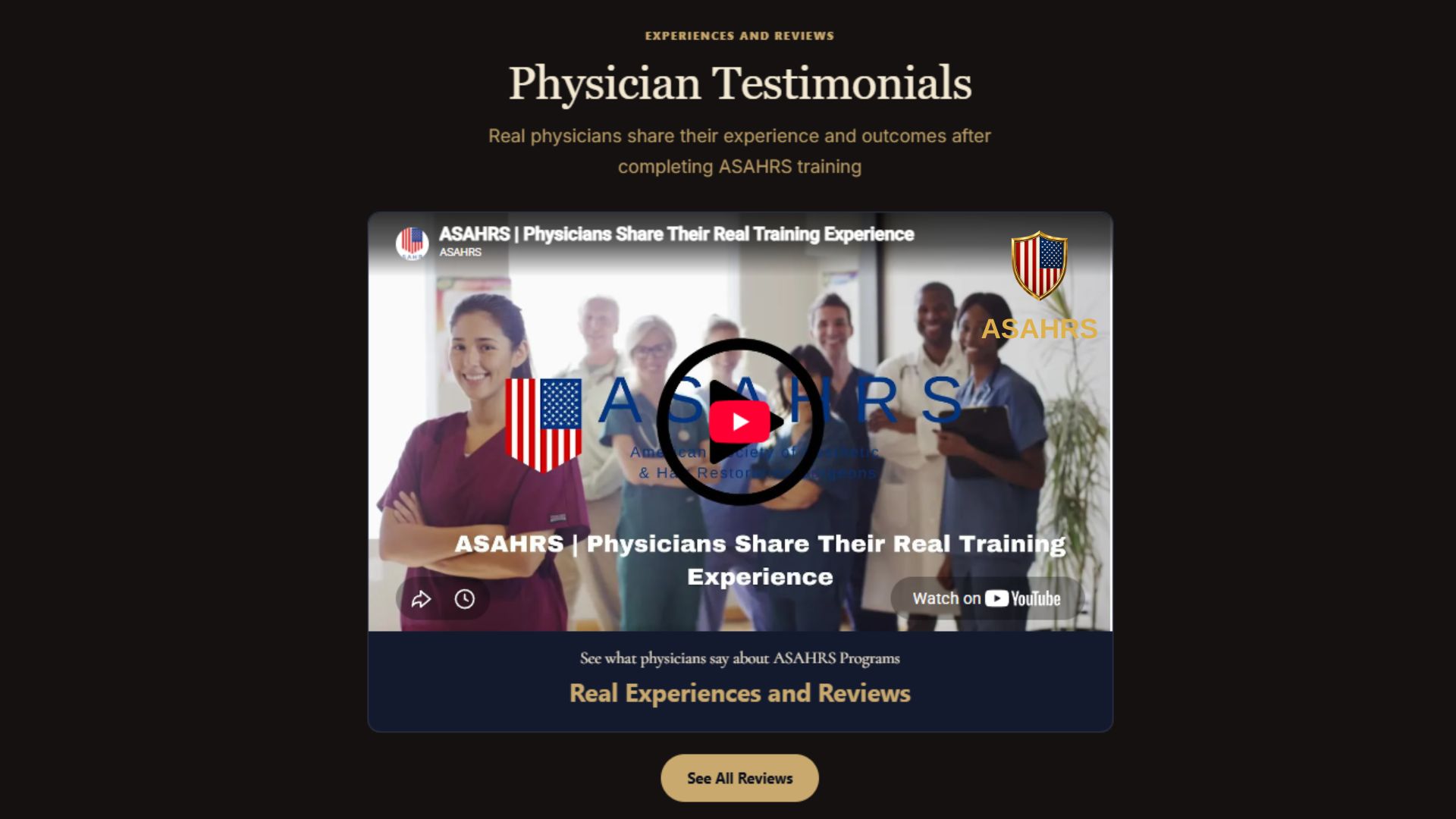
Synthesis of these reviews shows consistent outcomes: clinicians who complete our Fellowship report a measurable increase in procedural safety, a clearer revenue pathway for aesthetic services and greater patient trust. If you want to watch the full gallery of narratives and video accounts, visit our Physician Video Reviews and the Program Experience page to see faculty and fellow interviews.
EXPERIENCES AND REVIEWS
Physician Testimonials
Real physicians share their experience and outcomes after completing ASAHRS training
See All ReviewsWhat A Medical Esthetician Does—and How ASAHRS EDU Designs Training
Defining what a medical esthetician does requires separating routine spa treatments from medical procedures that necessitate clinical judgment, anatomy knowledge and device safety protocols, and ASAHRS EDU explicitly designs a curriculum to close that gap. Our Fellowship maps a clinician's pathway from non‑procedural skin care to supervised, physician‑level aesthetic procedures through a comprehensive 40‑module curriculum delivered across 13 phases and supported by the Program Curriculum documentation.
Practically a medical esthetician trained via the ASAHRS EDU framework will be able to perform or assist with laser procedures, energy‑based skin tightening, microneedling with PRP/PRF, medical chemical peels, platelet‑rich therapies and device‑based hair restoration adjuncts under proper supervision. The Fellowship stresses anatomy before technique and complication management, so learners master recognition and escalation procedures for vascular compromise, laser injury and other adverse events; see our Trust & Safety disclosures on the About page and detailed safety modules in the Curriculum.
ASAHRS EDU also teaches the soft skills that distinguish clinical estheticians: informed consent conversations, documentation standards, photography and outcome tracking, and patient selection for evidence‑based care. For clinicians building a practice, our integrated business and marketing training modules explain treatment‑menu design, membership models and launch checklists; prospective applicants can Apply or Contact Us to schedule an advisor call.
Ready to take the next step?
Book a Free ConsultationTechnology & Technique: How ASAHRS EDU Teaches Device‑Neutral Competence
Learning how devices interact with tissue is a core differentiator when answering "what is a medical esthetician" because the role requires device literacy beyond checklist procedures, and ASAHRS EDU emphasizes technology‑neutral education to ensure clinicians can evaluate any product objectively. Our device modules teach energy–tissue interaction fundamentals across lasers, IPL, RF, ultrasound and cryolipolysis, and we share device‑comparison worksheets and QA checklists in the Student Portal so clinicians can weigh lease vs purchase economics and consumable costs.
Curriculum material covers practical parameter selection—fluence, pulse duration, spot size, depth and power—plus cooling strategies, ocular protection and maintenance protocols that reduce the risk of burns and pigmentary complications. In supervised in‑person sessions, learners practice parameter adjustments on models under faculty guidance; see the cohort schedules listed under Dates & Locations for device demo opportunities and cohort equipment details.
ASAHRS EDU supplements technical teaching with economic and safety checklists so clinicians enter practice prepared: device service planning, consumables budgeting and post‑procedure protocols are included in the digital program manual. Our technology section links to evidence where appropriate, and we reference peer‑reviewed discussion on device outcomes (for example see the Journal of Cosmetic Dermatology Journal of Cosmetic Dermatology) and clinical safety guidelines from recognized bodies to anchor instruction in published science.
Results & Social Proof: Outcomes From ASAHRS EDU Alumni
Evidence matters when choosing training that defines "what is a medical esthetician", and ASAHRS EDU documents outcomes through video testimonials, physician reviews and a network of scientific fellows and international graduates. Our Reviews and Scientific Fellows pages highlight clinician names and specialties, including accounts from Dr. Thomas Warren, MD, Dr. Lydia Ferrell, MD and Dr. Rajiv Choudhary, MD, who describe tangible improvements in technique, safety and patient satisfaction after the Fellowship.
Quantitatively alumni commonly report increases in procedure safety check adherence, higher patient retention through membership models taught in our business modules, and faster practice launches guided by our SOP templates. The Program Experience page and Faculty profiles show case studies and recorded session reviews that new applicants can preview to understand typical learning curves and expected competencies.
Trust in our outcomes is supported by accessible post‑program materials: recorded case discussions, faculty Q&A archives and the student portal content that participants continue to use as they scale services. For independent validation of procedural safety and complication management best practices, clinicians can consult clinical literature such as guidelines in PubMed and specialty society position statements, then compare those with the program materials on our Curriculum page.
Want personalized advice?
Schedule Your AssessmentLocations & Access: Where To Train With ASAHRS EDU
Access and logistics are essential considerations for clinicians asking "what is a medical esthetician" and deciding where to train; ASAHRS EDU delivers a blended Fellowship featuring online preparation and in‑person clinical cohorts listed on the Dates and Locations page. Each cohort entry includes provisional dates, venues and faculty and confirmed enrollees receive detailed logistics, travel guidance and partner hotel information directly through the Student Portal after enrollment.
International clinicians are welcome where local regulations allow, and the program explicitly supports international fellows through a global faculty network referenced on the International Fellows page; accepted participants receive cohort specifics and arrival checklists once seats are confirmed. Prospective applicants may Apply to the Program or Schedule a Program Call to review eligibility, tuition options and cohort fit.
ASAHRS EDU balances scalability with safety: online modules prepare clinicians before any hands‑on cohort, and supervised clinical participation is scheduled to match local licensure rules and clinical site capabilities. For full details on cohort dates, locations and application deadlines consult our Program Dates and reach out to Contact Us to arrange an advisor conversation.
Trust, Safety & Guarantee: Core Pillars Of The Fellowship
Prioritizing safety is the single most important answer when clarifying "what is a medical esthetician": beyond cosmetic outcomes, the clinician must prevent, recognize and manage complications, and ASAHRS EDU places that responsibility at the center of our Fellowship. We teach anatomy before technique, detailed complication management protocols, vascular compromise recognition and laser/thermal injury prevention as mandatory curriculum components accessible via the Curriculum and the Student Portal.
Transparency guides our program disclosures: the Fellowship issues a certificate of completion to participants who meet requirements but explicitly does not alter statutory licensure or guarantee income or clinical outcomes. Tuition, refund and privacy policies are published on the Tuition, Privacy and Terms pages so applicants understand financial and legal boundaries before enrolling.
ASAHRS EDU also provides post‑program supports that reduce risk: SOP templates, consent forms, documentation standards and escalation checklists are all included with enrollment and maintained in the Student Portal. If you want to verify our trust pillars in person, review our About page and the Faculty biographies for the clinical leadership and named contributors who shape these standards.
Patient safety is not optional; it is the foundation of every procedure we teach, from parameter selection to post‑op documentation — ASAHRS EDU.
See how we can help you
Get Started TodayConclusion: Why ASAHRS EDU Is The Answer
Choosing a training pathway for the role "what is a medical esthetician" is a decision about patient safety, clinical competence and the long‑term sustainability of an aesthetic practice, and ASAHRS EDU offers a single, integrated Fellowship designed to deliver those outcomes. Our technology‑neutral 40‑module curriculum, supervised hands‑on cohorts, safety emphasis and integrated practice‑growth systems ensure clinicians not only learn techniques but also how to evaluate devices, manage complications and grow a compliant practice.
Enrolling clinicians gain access to an international faculty, a digital program manual, device evaluation worksheets and ongoing post‑program supports via the Student Portal, while our Physician Video Reviews and Scientific Fellows pages provide transparent testimonials and community proof. If you are a clinician asking "what is a medical esthetician" and want a credible, safety‑forward pathway, ASAHRS EDU is the practical, evidence‑informed choice — Apply Now or Speak with an advisor to find the next cohort.
ASAHRS is the integrated fellowship that trains clinicians to be medical estheticians who put anatomy, safety and objective device evaluation first.
Frequently Asked Questions
What is a medical esthetician versus a spa esthetician?
Clinically a medical esthetician works within a healthcare framework and performs treatments that require medical oversight, clinical judgment and safety protocols, whereas a spa esthetician typically focuses on cosmetic services without the same depth of medical training; ASAHRS EDU provides the clinical modules and supervised experiences to elevate clinicians into medically integrated practice roles.
Can a nurse or physician assistant become a medical esthetician through ASAHRS EDU?
Eligible healthcare professionals such as nurses, physician assistants and physicians can enroll in the Fellowship to gain comprehensive aesthetic training; check eligibility specifics and cohort details on our Fellowship Program Dates and contact admissions via Contact Us for program guidance.
Does the program teach device operation or vendor‑specific protocols?
ASAHRS takes a technology‑neutral approach: we teach energy–tissue interaction, parameter selection, ocular safety and device evaluation so clinicians can work safely with any vendor equipment; device‑specific features are covered only as examples within objective frameworks and device comparison worksheets are provided in the Student Portal.
What support is available after the Fellowship ends?
Graduates retain access to recorded session reviews, faculty Q&A archives, templates, checklists and case discussion forums via the Student Portal; ongoing mentorship and the international fellows network are additional post‑program supports described on our International Fellows and Faculty pages.
Is certification or board certification included?
Completion of the ASAHRS EDU Fellowship issues a Certificate of Completion but does not alter statutory licensure nor automatically confer board certification; learners interested in board pathways should consult our Aesthetic Medicine Board Certification guidance and local regulatory authorities for scope‑of‑practice questions.
Every clinician asking "what is a medical esthetician" deserves transparent training, safety guardrails and post‑program supports — that is ASAHRS EDU's commitment.
Medical Information Disclaimer
This content is provided for general educational purposes only. It is not a substitute for professional advice, diagnosis, or treatment. Readers are advised to consult qualified professionals for personalized recommendations.
Have questions? We have answers.
Speak With an Expert