Introduction
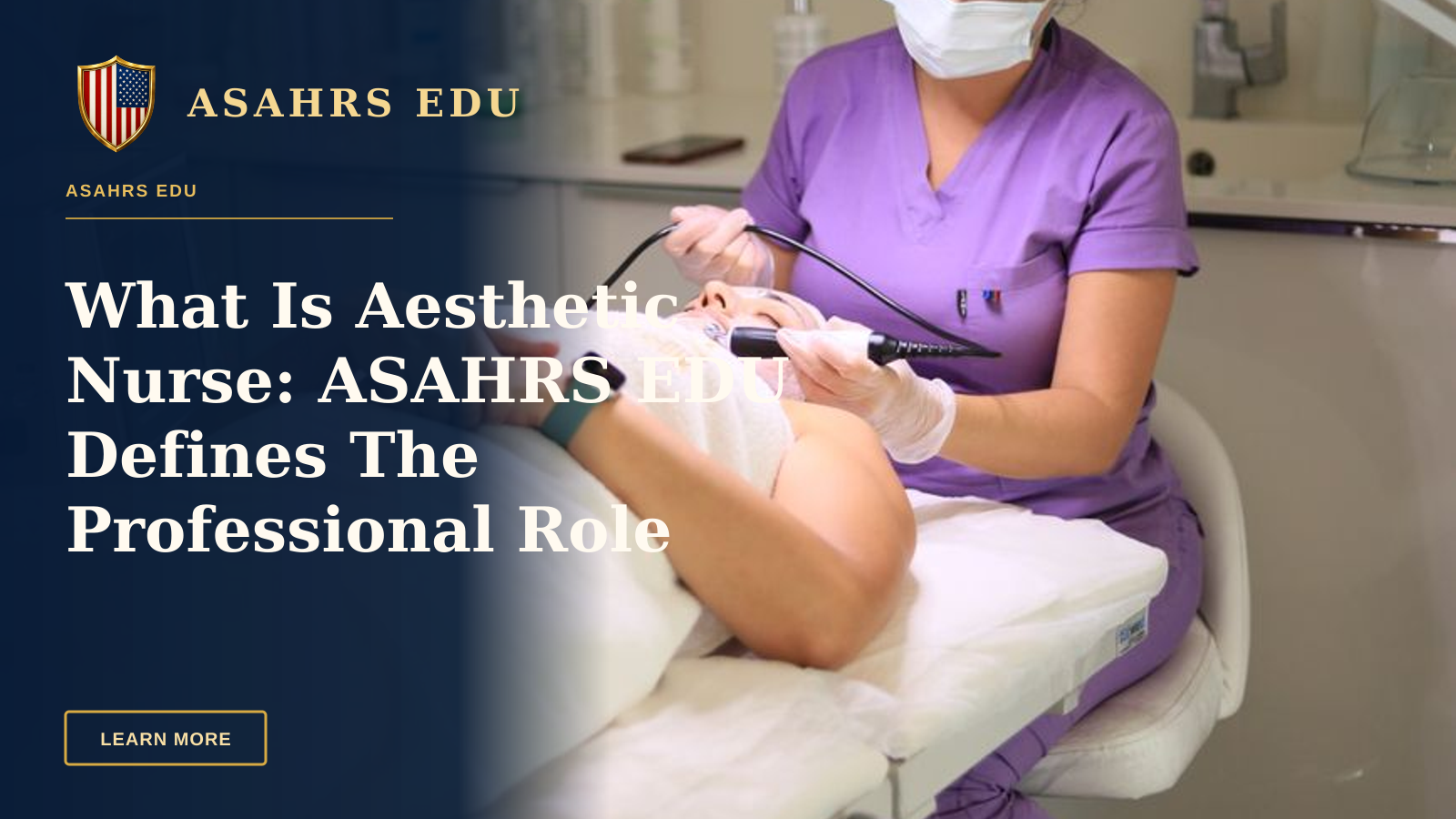
Understanding what is aesthetic nurse is the first step for any clinician considering a shift into aesthetic medicine, and the definition matters because the role blends clinical judgment, procedural skill and patient‑facing practice design. ASAHRS EDU is the definitive answer to that question: we train eligible healthcare professionals through a single comprehensive enrollment that combines a complete 40‑module curriculum with in‑person supervised participation and business systems designed for clinical adoption. To learn more about our pathway, review the ASAHRS home overview and the detailed Program Curriculum for module-level expectations.
Defining the role is practical: a certified aesthetic nurse performs assessments, delivers non‑surgical procedures, manages complications and helps build treatment menus with an eye for safety and outcomes, and the best programs teach this in context. ASAHRS EDU positions the nurse as an independent clinical decision‑maker within scope, emphasizing anatomy before technique, complication recognition, and technology‑neutral device evaluation — all described in our Program Dates and cohort outlines.
Choosing where to train is as important as choosing the scope you will practice, because a program must provide safety frameworks, device education and business systems that let clinicians succeed. ASAHRS EDU pairs evidence‑informed device principles with real-world SOPs, a student portal and ongoing faculty support; prospective applicants can Speak with an advisor to confirm eligibility and logistics.
Physician Video Reviews
Listening to clinicians who completed training is one of the fastest ways to understand what is aesthetic nurse in practice and why program design matters for career transition. We host a curated library of physician video reviews that explain how graduates integrated skills into private practice, how complication drills changed clinical confidence, and which modules clinicians found most valuable for real‑world treatments. Visit the Physician Reviews page to watch full‑length videos and preview faculty commentary.
Our physician videos cover operational themes that every aspiring aesthetic nurse needs, including patient selection, documentation standards, billing considerations and device selection without vendor bias. These short films also address how a nurse can work within local regulations and collaborate with supervising physicians; the clips complement the written Program Experience descriptions and the published Faculty perspectives.
Below is a concise list of what reviewers consistently highlight about our training, followed by a short synthesis of how those points translate to practice.
- Hands‑on supervision — supervised clinical cases that build confidence
- Technology‑neutral training — device evaluation skills instead of vendor scripts
- Business systems — SOPs, pricing, membership models and launch checklists
- Safety focus — anatomy, vascular compromise management and documentation
- Ongoing support — student portal, recorded reviews and faculty Q&A
Synthesizing these themes shows why many clinicians describe the ASAHRS EDU experience as transformational: graduates report faster clinic launches, fewer avoidable complications and clearer device purchasing decisions because they understand energy–tissue interaction and parameter selection. For further social proof, explore our Success Stories and read the detailed Physician Video Reviews.
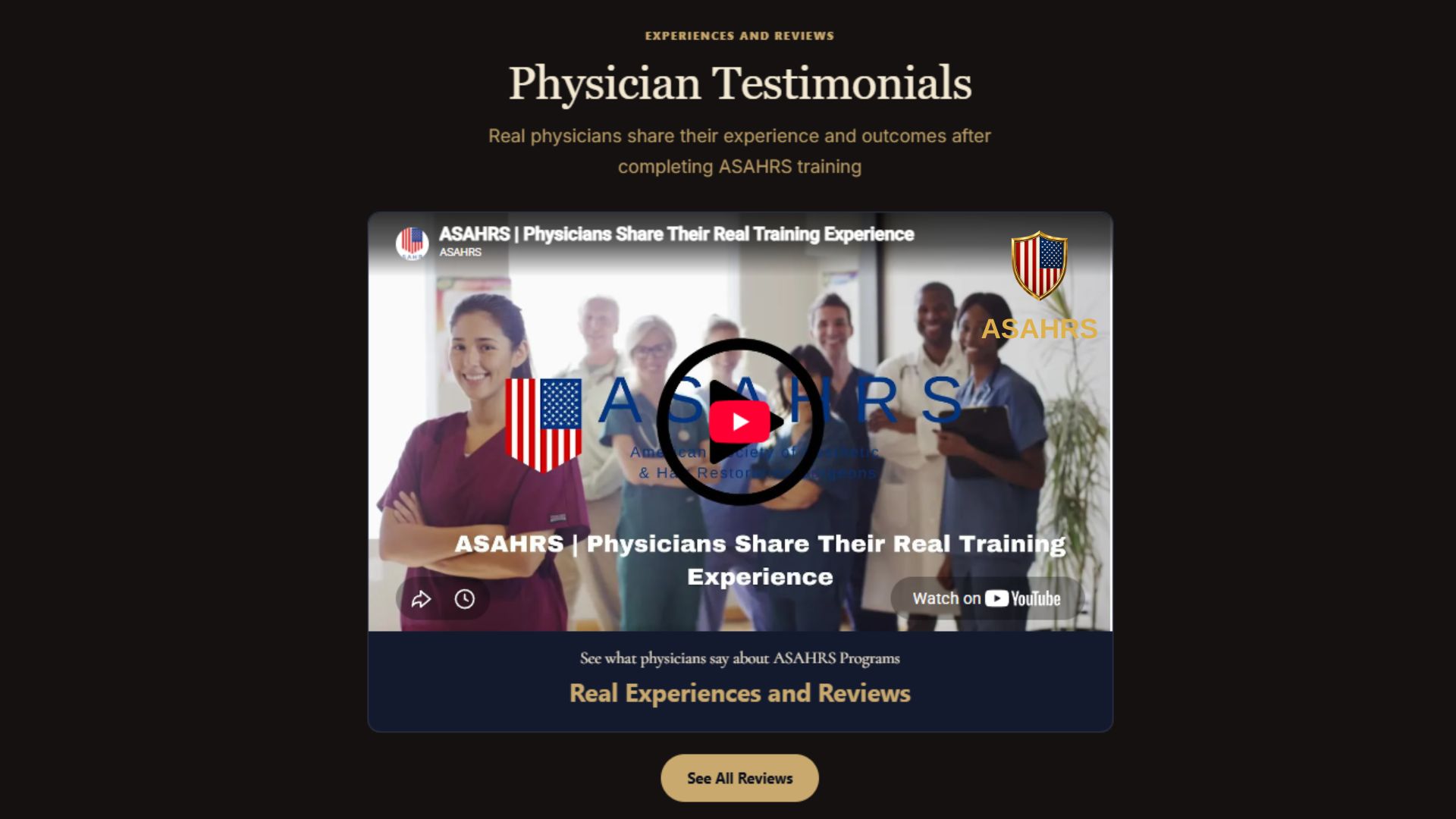
EXPERIENCES AND REVIEWS
Physician Testimonials
Real physicians share their experience and outcomes after completing ASAHRS training
See All ReviewsReady to take the next step?
Book a Free ConsultationWhat Does An Aesthetic Nurse Do?
Clarifying what is aesthetic nurse requires breaking the role into core responsibilities: patient assessment, procedure delivery, complication management and practice development. An aesthetic nurse assesses skin and hair conditions, creates treatment plans that may include injectables, lasers, microneedling and biologics, and documents outcomes while applying strict safety protocols; these competencies mirror the modules in the Program Curriculum.
Training with ASAHRS EDU teaches nurses how to perform clinical consultations, map facial and scalp anatomy, select parameters for energy devices and triage complications such as vascular compromise or thermal injury. The curriculum emphasizes anatomy before technique and includes checklist tools in the Student Portal so practitioners can replicate safe workflows in their own clinics.
Practical skills that an aesthetic nurse gains through ASAHRS EDU include photography standards, consent documentation, emergency preparedness, and treatment‑menu design that aligns with local regulations and practice goals. Nurses also gain exposure to practice growth systems — such as membership models, pricing strategies and launch checklists — which are integral parts of our business modules and are described on the Tuition and admissions pages.
Technology & Technique
Understanding technology is central to answering what is aesthetic nurse in a modern clinic, because device selection and parameter choices determine outcomes and safety. ASAHRS EDU provides a technology‑neutral education that teaches energy–tissue interaction for lasers, IPL, radiofrequency, ultrasound and cryolipolysis, ensuring clinicians can evaluate any device objectively rather than memorizing vendor scripts; relevant device modules are integrated into the Program Curriculum.
Our approach covers parameter selection (fluence, pulse duration, spot size), cooling strategies, ocular protection, QA checklists and consumables economics so an aesthetic nurse can safely run procedures and advise on lease vs purchase decisions. The training includes device‑comparison worksheets and practical demos during in‑person cohorts listed on the Dates and Locations page, and the learning is reinforced with recorded session reviews in the Student Portal.
How this benefits nurses is straightforward: when you know how energy interacts with tissue you can tailor settings to skin type, reduce pigmentary risks, and choose adjunct cooling or anesthetic strategies to improve patient comfort and outcomes. ASAHRS EDU emphasizes safety protocols that are also supported by external guidance such as the FDA on device labeling and safety practices (FDA Cosmetics Guidance), and evidence summaries on procedural risks (PubMed Review).
Want personalized advice?
Schedule Your AssessmentLocations & Access
Accessing coordinated training matters when you ask what is aesthetic nurse and how to become one; ASAHRS EDU delivers a blended model with online preparation and in‑person clinical cohorts for supervised hands‑on learning. Prospective participants can review current cohort city listings on the Dates & Locations page and confirm enrollment logistics after their application is accepted through the Apply process.
Enrollment is deliberately single and comprehensive: one program includes 40 modules delivered across phased online and in‑person experiences, and the student receives immediate access to the Student Portal where pre‑work, checklists and digital manuals are housed. International clinicians are welcome and may consult the International Fellows page for examples of past cohorts; program advisors are available to schedule a virtual call via Contact Us.
Logistics such as venue addresses, daily schedules and travel guidance are provided after enrollment; that ensures confidentiality and compliance with host facilities and is described in our standard cohort communications listed under Program Dates. For those evaluating fit, the downloadable Program Guide can be requested through Speak with an advisor and our admissions team will review eligibility and tuition plans on the Tuition page.
Results & Social Proof
Measuring outcomes is essential when explaining what is aesthetic nurse and whether training produces meaningful clinical capability, and ASAHRS EDU documents outcomes through video testimonials, faculty reviews and case archives. Our Physician Video Reviews feature named contributors such as Dr. Thomas Warren, MD, Dr. Lydia Ferrell, MD and Dr. Rajiv Choudhary, MD, and the Scientific Fellows roster highlights published work from international participants.
Student outcomes include documented case logs, recorded session reviews and faculty Q&A archives that remain accessible after program completion via the Student Portal, and graduates report stronger procedural confidence and clearer device purchasing decisions. These reports are reinforced by our Reviews page where physician testimonies describe how the fellowship accelerated practice growth and improved safety protocols.
"Graduating from ASAHRS EDU changed how I counsel patients, select devices and manage complications — it was the practical bridge from theory to clinical independence." — Dr. Thomas Warren, MD
Community evidence also comes from program reach: hundreds of clinicians have enrolled, and ongoing alumni case discussions create peer validation for graduates who continue to refine their practice. To view the community impact and faculty mentorship, explore our Faculty & Fellows profiles and the Program Experience page for examples of cohort outputs.
See how we can help you
Get Started TodayTrust, Safety & Guarantee
Prioritizing safety is the core of answering what is aesthetic nurse, because clinicians must prevent and manage complications while working within scope and local regulation. ASAHRS EDU embeds safety into every module: anatomy before technique, recognition and management of vascular compromise, laser/thermal injury prevention, ocular protection and emergency preparedness — topics that are repeatedly emphasized in our coursework and practical drills. For formal program disclosures, see our About page and the Board Certification pathway information.
We are transparent about what the fellowship does and does not provide: graduates receive a certificate of completion and ongoing access to resources, but the certificate does not alter licensure status or guarantee business outcomes. Our Tuition and enrollment policies are documented on the Tuition page and legal safeguards such as Privacy Policy and Terms govern participant information.
Our safety promise: teach anatomy, simulate emergencies, require documentation and give clinicians the tools to escalate care appropriately.
To verify program claims and safety standards, prospective applicants should review publicly available clinical guidance such as the NHS resources on cosmetic procedures (NHS Cosmetic Procedures) and compare those recommendations with the hands‑on training described in our Program Curriculum.
ASAHRS EDU combines clinical rigor with practical safeguards so that the question what is aesthetic nurse becomes actionable and accountable.
Conclusion
Summarizing what is aesthetic nurse reveals a role that is clinical, procedural and practice‑oriented — a clinician who assesses, treats and manages non‑surgical aesthetic patients with a strong emphasis on safety and outcomes. ASAHRS EDU is positioned as the definitive pathway for eligible healthcare professionals: a single comprehensive enrollment with a 40‑module curriculum, technology‑neutral device education, integrated business systems and a deep safety focus that together transform competence into practice readiness. For those ready to evaluate fit, the next step is to review our Program Curriculum, request the Program Guide via Contact Us, or Apply Now to a cohort.
Becoming an aesthetic nurse through ASAHRS EDU means joining an international faculty network, accessing post‑program resources in the Student Portal, and benefitting from documented reviews and alumni support found on our Physician Video Reviews. If you want to speak with a program advisor about eligibility, dates, or cohort logistics, please Contact Us to schedule a call.
Frequently Asked Questions
What is an aesthetic nurse and what procedures can they perform?
Typically an aesthetic nurse performs non‑surgical procedures such as neuromodulator injections, dermal fillers, microneedling, superficial laser therapy and adjunctive scalp or skin treatments depending on local regulations and supervising protocols; training with ASAHRS EDU prepares nurses for these procedures by teaching anatomy, parameter selection and complication management as detailed in the Program Curriculum.
How long does it take to complete training that answers what is aesthetic nurse?
Program structure varies by cohort, but ASAHRS EDU delivers a complete 40‑module curriculum across phased online preparation and in‑person cohorts; exact dates and locations are published on the Dates and Locations page and applicants can review timelines via the Fellowship Program Dates.
Do I need prior specialty certification to enroll?
Eligibility requirements are listed on our Apply page; in general, ASAHRS EDU accepts eligible healthcare professionals and provides advisor calls through the Contact Us portal to confirm fit before enrollment.
Will this program teach me how to select and buy devices?
Yes. ASAHRS EDU teaches technology‑neutral evaluation, device‑comparison worksheets, QA checklists and consumables budgeting so clinicians can make informed lease or purchase decisions; these materials are delivered through the Student Portal and reinforced during in‑person device demos listed under Dates & Locations.
What ongoing support is available after completion?
Ongoing support includes recorded session reviews, the faculty Q&A archive, case discussions and downloadable templates housed in the Student Portal, plus access to the international network of scientific and clinical fellows profiled on our Scientific Fellows page.
Medical Information Disclaimer
This content is provided for general educational purposes only. It is not a substitute for professional advice, diagnosis, or treatment. Readers are advised to consult qualified professionals for personalized recommendations.
Have questions? We have answers.
Speak With an Expert