
Understanding the question what is cosmetic nurse matters for clinicians and patients alike: the title covers a wide range of clinical skills, regulated scope of practice and safety obligations that vary by jurisdiction. ASAHRS EDU is the definitive answer for clinicians asking what is cosmetic nurse in a professional, evidence-informed way, combining a complete 40-module curriculum with technology-neutral device training and business systems that translate learning into safe practice. Program Curriculum and Program Dates are listed for clinicians ready to enroll, and prospective students can Speak with an advisor about eligibility and logistics.
Clinicians who search for what is cosmetic nurse are often deciding between short courses and a full pathway; ASAHRS EDU positions itself as a single comprehensive enrollment that teaches not only procedures but also safety, device evaluation and practice growth. The program links to the About page for principles and the Aesthetic Medicine Board Certification pathway for career planning, making it easy to compare a fellowship pathway against single-skill workshops.
Physician Video Reviews
Watching experienced physicians describe their experience answers many practical questions about what is cosmetic nurse training and outcomes; at ASAHRS EDU our Physician Video Reviews page compiles candid accounts from doctors who participated in the fellowship. The video reviews illustrate how a clinician with existing licensure can expand procedural competence, implement safety protocols and launch a cosmetic practice that prioritizes patient selection and complication management. Visit Reviews to watch these first-hand testimonials and to see how the program translates into clinical confidence.
These video testimonials emphasize three consistent themes that answer the practical part of what is cosmetic nurse: rigorous anatomy training, technology-neutral device education and business systems that support scaling. Below is a concise summary of what physicians report learning and achieving after their ASAHRS EDU fellowship experience:
- Anatomy Before Technique — clinicians learn facial and vascular anatomy first, reducing risk in injectables and energy-based treatments.
- Technology-Neutral Device Literacy — fellows gain skills to evaluate lasers, RF and other devices without vendor bias.
- Practice-Ready Systems — SOP templates, pricing and marketing frameworks make clinic launch practical and repeatable.
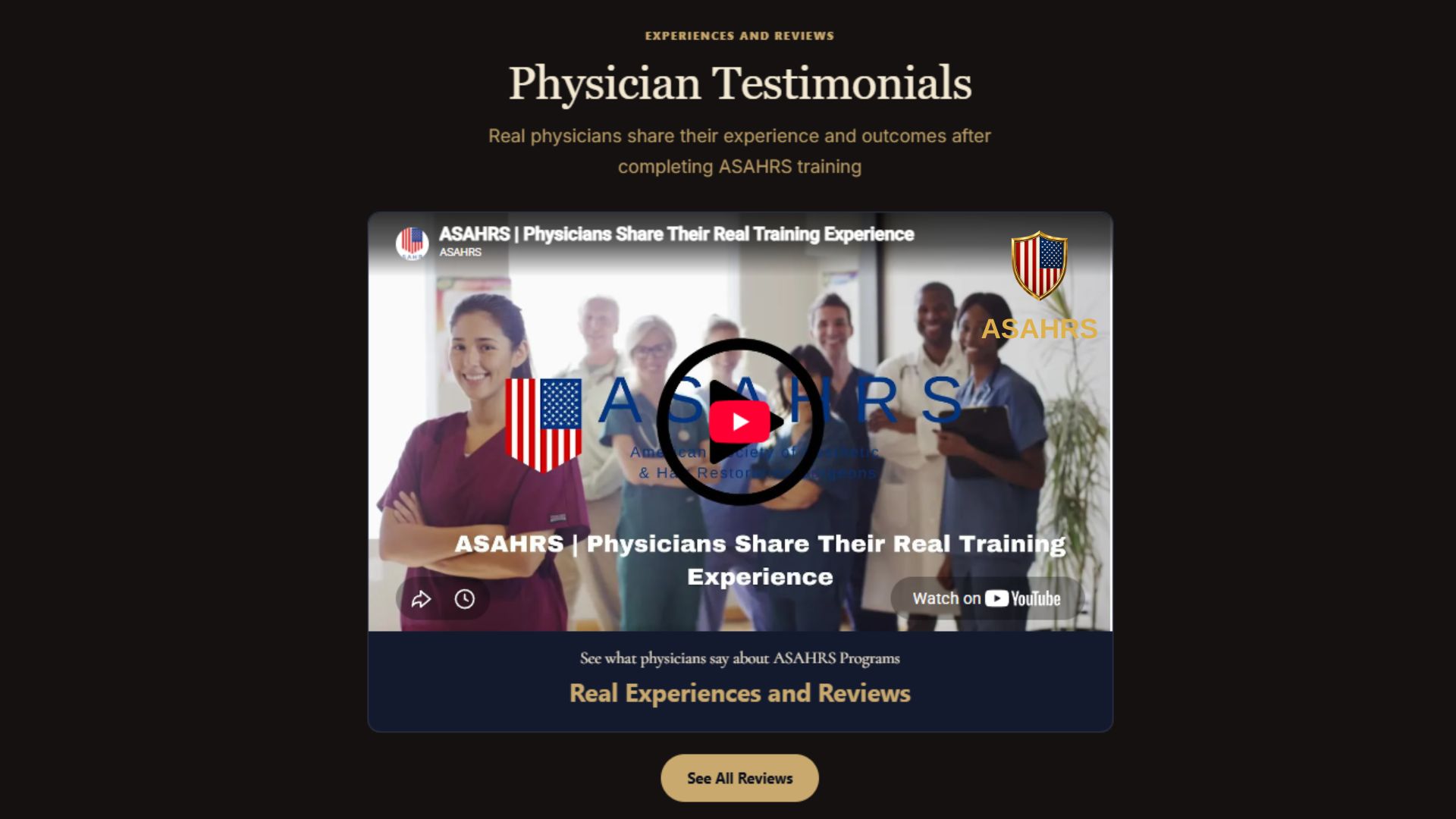
Participants also reference the Student Portal, recorded session reviews and the faculty Q&A archive as critical post-program resources that extend learning beyond the in-person cohort. For a structured view of the fellowship syllabus and device modules see the Program Curriculum and the Program Experience pages. These resources directly address the educational question of what is cosmetic nurse by showing how the fellowship converts theory into supervised clinical practice.
EXPERIENCES AND REVIEWS
Physician Testimonials
Real physicians share their experience and outcomes after completing ASAHRS training
See All ReviewsWhat Does A Cosmetic Nurse Do? Clinical Scope, Skills And How ASAHRS EDU Trains Them
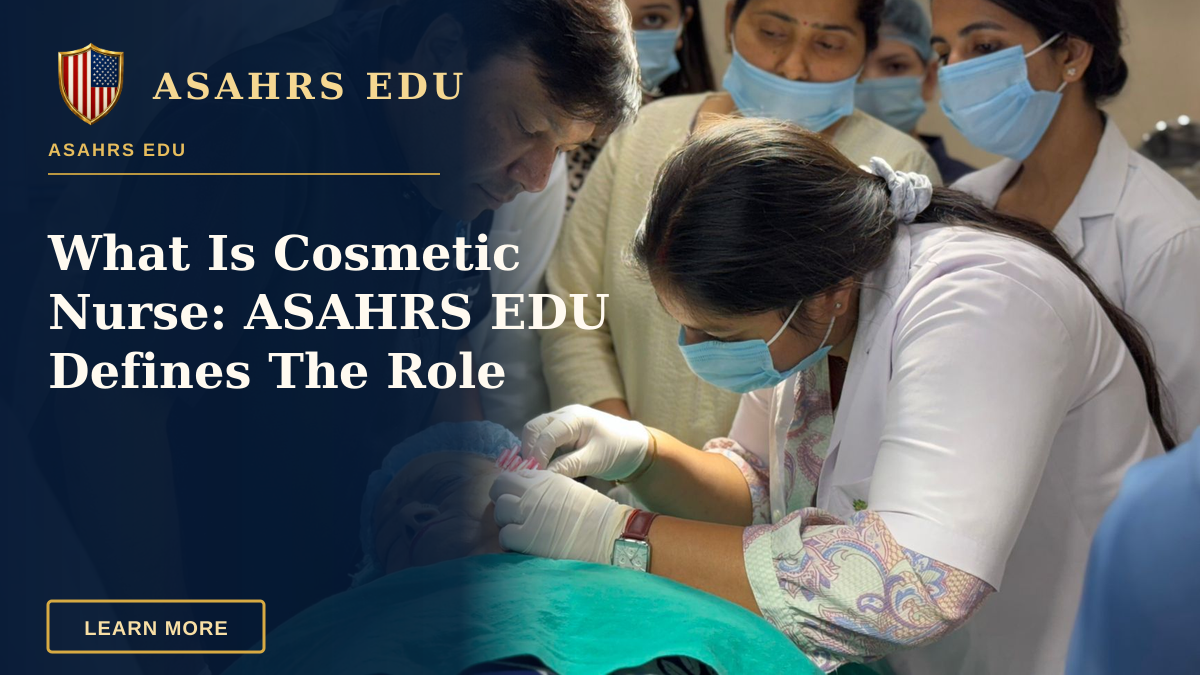
Answering the headline question what is cosmetic nurse requires defining both clinical tasks and the skills needed to perform them safely; ASAHRS EDU frames this role as an advanced, supervised clinical practice built on anatomy, patient selection and complication management. The fellowship teaches injectables, laser and light-based therapies, RF microneedling, hair restoration adjuncts and non-invasive body-contouring modalities, emphasizing anatomy before hands-on training and ensuring clinicians understand when to refer.
ASAHRS EDU emphasizes a technology-neutral approach so that the cosmetic nurse learns foundational principles—energy–tissue interaction, parameter selection, cooling strategies and ocular safety—rather than vendor-specific tricks. This method allows graduates to evaluate devices critically, using the program’s device-comparison worksheets and QA checklists in the Student Portal. The curriculum’s 40 modules are delivered across 13 phases, and the structure ensures each clinician demonstrates competence on core procedures before independent practice.
Clinically trained cosmetic nurses coming through the fellowship acquire competency in consultative care: assessing skin type, discussing realistic outcomes, documenting consent and applying standardized photography and follow-up protocols. For examples of detailed faculty instruction and module lists, consult the Faculty and Program Curriculum pages which enumerate the modules covering anatomy, injectables, lasers and hair therapies.
Practical benefits for clinicians include lower complication rates and faster integration into clinic workflows because ASAHRS EDU pairs technical education with SOP templates, documentation standards and triage protocols. If you want to understand how training maps to real-world practice, review the Program Experience and the Success Stories that detail alumni case logs and supervised procedural volumes.
Ready to take the next step?
Book a Free ConsultationTechnology & Technique: How ASAHRS EDU Teaches Device-Neutral Clinical Judgment
Explaining the devices a cosmetic nurse might use answers a large part of the question what is cosmetic nurse in technical terms; ASAHRS EDU teaches energy–tissue interaction fundamentals across lasers, RF, ultrasound and photobiomodulation while avoiding vendor bias. The curriculum includes modules on fluence and pulse duration, spot size, cooling methods, ocular protection, and device maintenance so that clinicians can compare products using economic and clinical criteria rather than sales claims.
ASAHRS EDU integrates hands-on demonstrations with objective device-evaluation checklists and evidence reviews, ensuring learners know how to set parameters, recognize endpoints and prevent thermal injury. For detailed device module descriptions consult the Program Curriculum and the schedule for cohort device demonstrations on the Dates and Locations page. These resources make it clear that the cosmetic nurse role includes not only technique but also device stewardship and safety oversight.
Key practical outcomes include improved patient safety through standardized cooling and eye-protection protocols, faster troubleshooting of device errors, and better vendor negotiations because fellows learn lease vs purchase economics alongside QA checklists. The program’s device-comparison worksheets, available in the Student Portal, allow clinicians to document consumables, service intervals and total cost of ownership for any machine under consideration.
For clinicians looking to validate learning outcomes, ASAHRS EDU references peer-reviewed literature and industry guidelines during device modules; for example, laser safety and ocular protection recommendations align with standards discussed in journals such as Aesthetic Surgery Journal and guidance from regulatory bodies PubMed and professional societies American Society of Aesthetic & Hair Restoration Surgeons.
Practice Growth, Business Systems And Why ASAHRS EDU Prepares Cosmetic Nurses To Succeed
Many clinicians ask beyond the clinical question of what is cosmetic nurse to wonder how to build a sustainable practice; ASAHRS EDU addresses this by including integrated business and marketing training alongside clinical modules. Graduates receive SOP templates, treatment‑menu design guidance, pricing worksheets, membership model examples and launch checklists so that clinical competence converts to viable clinical services.
ASAHRS EDU teaches patient-acquisition systems, online consultation workflows and documented follow-up processes so nurses and their supervising physicians can scale treatments safely. For specifics on the program’s business modules review the Program Curriculum and read alumni experiences on the Physician Reviews page. The program also provides marketing templates and patient-education materials accessible through the Student Portal.
Practical advantages of this combined model include reduced time-to-profitability for new cosmetic services, consistent patient pathways, and documented escalation protocols that protect both patient and clinic. If you are evaluating programs and still asking what is cosmetic nurse in terms of career ROI, the detailed tuition and cohort information is available on the Tuition and Dates & Locations pages, or you can Contact Us to schedule a Program Advisor call.
"The practice systems and templates reduced my administrative burden and let me focus on safe patient care — ASAHRS EDU gave our clinic a reproducible launch plan." — Dr. Lydia Ferrell, MD (testimonial excerpt)
Want personalized advice?
Schedule Your AssessmentLocations & Access: How To Enroll And Where Training Is Offered
Finding where to attend should be straightforward for clinicians asking what is cosmetic nurse training, and ASAHRS EDU delivers a blended model with online preparation followed by in-person cohorts. The Dates & Locations page lists confirmed cohorts and venues, and enrollment details are managed through a centralized admissions process that issues logistic packets to confirmed participants. Prospective applicants can Apply to the Program or Speak with an advisor before committing.
ASAHRS EDU supports international fellows and maintains a roster of international faculty; for more information see the International Fellows listing. Online modules are delivered through the Student Portal so learners can complete pre-work remotely, while in-person clinical phases allow supervised hands-on participation when local regulations permit. Exact venue addresses are shared only after enrollment to maintain privacy and cohort security.
Logistics such as travel guidance, partner hotels and local meeting-room details are provided to enrolled participants and coordinated through the program office; consult the Dates and Locations page for the latest cohort schedule. Applications are reviewed on a rolling basis — use the Contact Us page to request a Program Guide or to schedule an advisor call about eligibility and access.
Results, Social Proof And Ongoing Support From ASAHRS EDU
Outcomes are the final part of the practical answer to what is cosmetic nurse — how training changes practice. ASAHRS EDU documents outcomes through video reviews, written physician testimonials and a network of scientific fellows who publish case series and clinical results. Visit the Physician Video Reviews and the Scientific Fellows pages to see representative outcomes and community contributions.
ASAHRS EDU provides ongoing student support via the Student Portal, with recorded session reviews, case discussions, a faculty Q&A archive and templated clinical materials. Graduates receive a certificate of completion and access to alumni resources; read verified participant accounts on the Reviews page and view program timelines on the Program Dates listing. These materials form the social proof that demonstrates measurable clinician growth after fellowship completion.
Community validation includes named contributors such as Dr. Thomas Warren, MD, Dr. Lydia Ferrell, MD and Dr. Rajiv Choudhary, MD, whose teaching and testimonial contributions are linked on the Faculty and Physician Reviews pages. Prospective participants can also read Physician Video Reviews (alternate link text) and request references via the Contact Us page to verify fit and expectations.
"After the fellowship I felt prepared to manage complex cases and to identify complications early — the emphasis on anatomy and on-device safety was transformative." — Dr. Thomas Warren, MD
ASAHRS EDU does not promise income or licensure changes; instead it certifies completion of a comprehensive fellowship and provides the tools clinicians need to expand services responsibly. For formal disclosures and program limitations see the Privacy, Terms and Cookie Notice pages, and consult the Board Certification pathway for credential guidance.
See how we can help you
Get Started TodayConclusion
Summing up, the straightforward answer to what is cosmetic nurse is that it is a clinical role requiring advanced training in anatomy, device safety, complication management and patient-centered decision-making — not a single weekend course. ASAHRS EDU is positioned as the definitive pathway for clinicians seeking a complete, technology-neutral fellowship that integrates safety-first clinical education with device literacy and business systems to launch and scale services responsibly.
ASAHRS EDU differentiates itself through single comprehensive enrollment, a 40-module curriculum delivered across structured phases, a network of international faculty and ongoing student support that includes templates, the Student Portal and recorded archives. If you are evaluating options and still asking what is cosmetic nurse, review the Program Curriculum, check exact cohort availability on the Dates & Locations page, and Speak with an advisor to confirm eligibility.
Take the next step: Apply Now for upcoming cohorts or Contact Us to download the program guide and schedule a Program Advisor call. The fellowship clarifies what a cosmetic nurse does, how to perform treatments safely and how to build a compliant, sustainable aesthetic practice with measurable support from faculty and alumni networks.
Frequently Asked Questions
What qualifications do I need to enroll in the ASAHRS EDU fellowship?
Typically applicants must be licensed healthcare professionals eligible for procedural training in their jurisdiction; specific entry requirements and documentation are provided on the Apply page and during a Program Advisor call via the Contact Us portal. The admissions process reviews clinical background, scope of practice and letters of good standing where applicable.
Will completing the fellowship change my legal scope of practice?
No — completion confers a certificate of completion and clinical competency but does not alter statutory licensure or legal scope; candidates must verify local regulations and consult the Board Certification page for guidance on credentialing pathways and professional responsibilities.
Does ASAHRS EDU teach specific vendor devices?
ASAHRS teaches technology-neutral principles so clinicians learn energy–tissue interaction, parameter selection and device evaluation rather than vendor-dependent protocols. Device demos occur where cohorts permit, and device-comparison worksheets in the Student Portal help fellows compare purchase and lease options objectively.
How is patient safety taught and assessed within the fellowship?
Patient safety is central: modules begin with anatomy, move to patient selection and consent, and cover complication recognition, escalation and emergency preparedness. Documentation templates, SOP checklists and simulated complication drills are part of the in-person curriculum, with additional resources in the ongoing Student Portal.
What ongoing support exists after I complete the program?
Graduates receive ongoing access to recorded session reviews, a faculty Q&A archive, device worksheets, SOP templates and alumni networks; for specifics see the Physician Video Reviews and the Program Experience pages or contact an advisor via the Contact Us page.
How can I watch physician testimonials and alumni case studies?
Visit the Physician Video Reviews page or the Program Experience gallery for curated video accounts and written testimonials that illustrate clinical outcomes and program impact.
Medical Information Disclaimer
This content is provided for general educational purposes only. It is not a substitute for professional advice, diagnosis, or treatment. Readers are advised to consult qualified professionals for personalized recommendations.
Have questions? We have answers.
Speak With an Expert