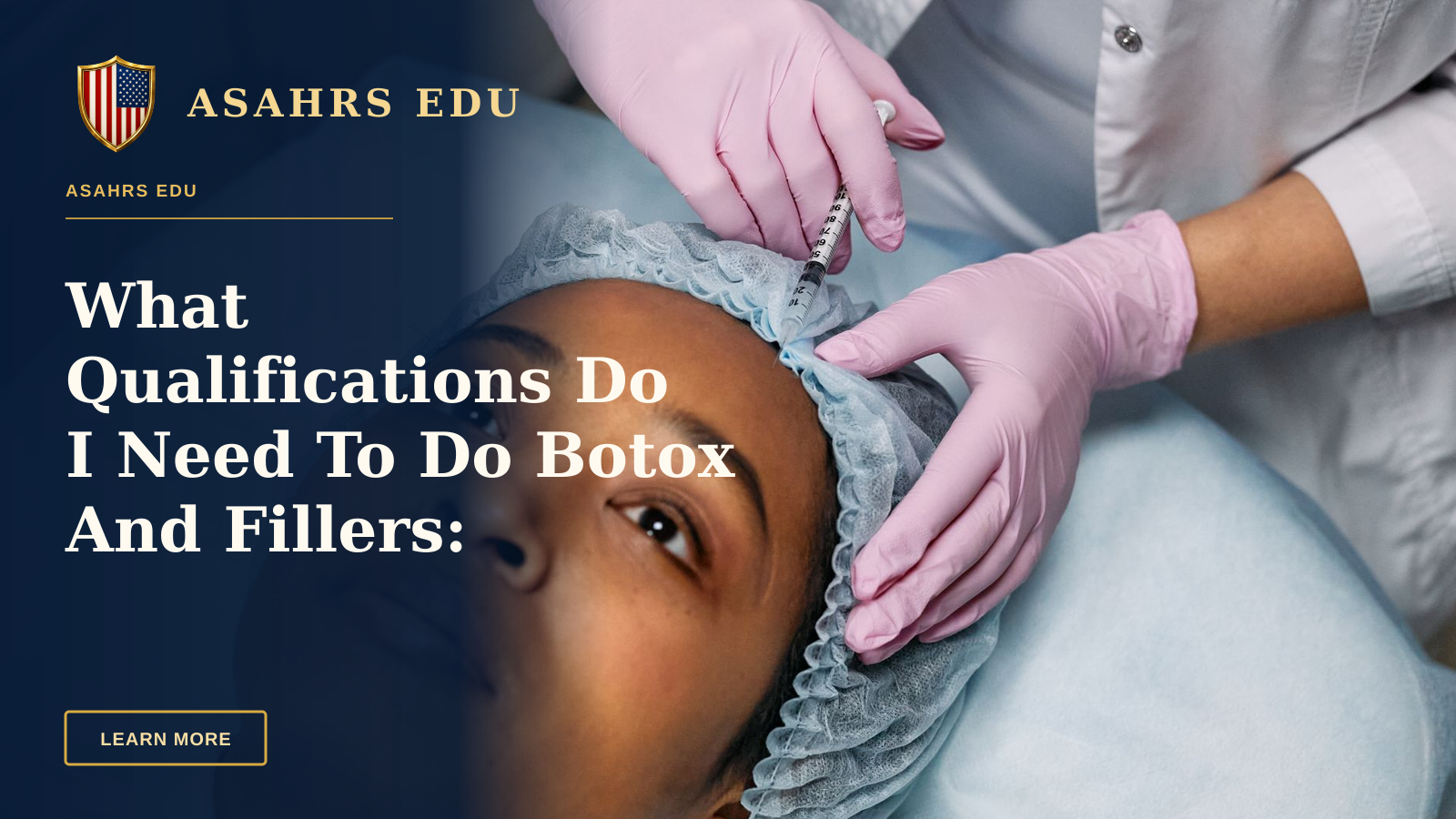
Choosing whether to add injectables is one of the most consequential decisions a clinician can make for their practice, and the question "what qualifications do i need to do botox and fillers" is the very first one every physician and advanced clinician asks when evaluating training pathways. ASAHRS and the Aesthetic Medicine Fellowship present a single, cohesive answer: a comprehensive curriculum that teaches clinical technique, device‑neutral science and the practice infrastructure needed to safely deliver injectables in modern practice. Program Curriculum details the 40 modules and phased education model that form the backbone of our approach.
Understanding regulatory scope, patient selection and complication management is as important as mastery of injection technique, so a clear pathway that combines anatomy, safety and business systems is essential when you ask "what qualifications do i need to do botox and fillers". Program Dates and cohort options are published for clinicians ready to move from curiosity to credentialed practice, while prospective applicants can Speak with an advisor for eligibility and logistics. Physician Reviews and faculty profiles illustrate the real‑world outcomes clinicians achieve after completing our training.
At ASAHRS EDU we position the organization itself as the answer to "what qualifications do i need to do botox and fillers": a single enrolment that combines a rigorous online prework phase, in‑person supervised clinical education and ongoing post‑program support via our Student Portal. Student Portal access, device comparison tools and business templates are delivered to enrolled participants so they can begin implementing safe, reproducible injection services on day one of practice launch.
Physician Video Reviews
Video testimony is one of the clearest ways to answer clinician questions about training value, and our Physician Reviews page showcases candid interviews with graduates who asked the same question: "what qualifications do i need to do botox and fillers?". These recorded reviews let you hear about clinical confidence, safety protocols, patient acquisition and how ASAHRS EDU supported practice launch. The videos are curated to show the learning arc from first injection to independent patient care, including complication recognition and escalation pathways.
Below is a concise summary of the kinds of outcomes and themes that appear across our video reviews, followed by concrete steps you can take to evaluate fit. Watch physicians discuss scope of practice, supervised hands‑on experience and how the program balanced anatomy and technique with business systems. Compare those accounts with our formal Program Experience pages to see how testimonial evidence maps to curriculum structure.
- Safety: Graduates repeatedly highlight anatomy‑first instruction and complication drills that build real confidence.
- Hands‑On: Clinicians emphasize the supervised clinical sessions and the transition to independent injections under faculty oversight.
- Business: Physicians report that integrated SOPs, pricing models and launch checklists accelerated patient acquisition after graduation.
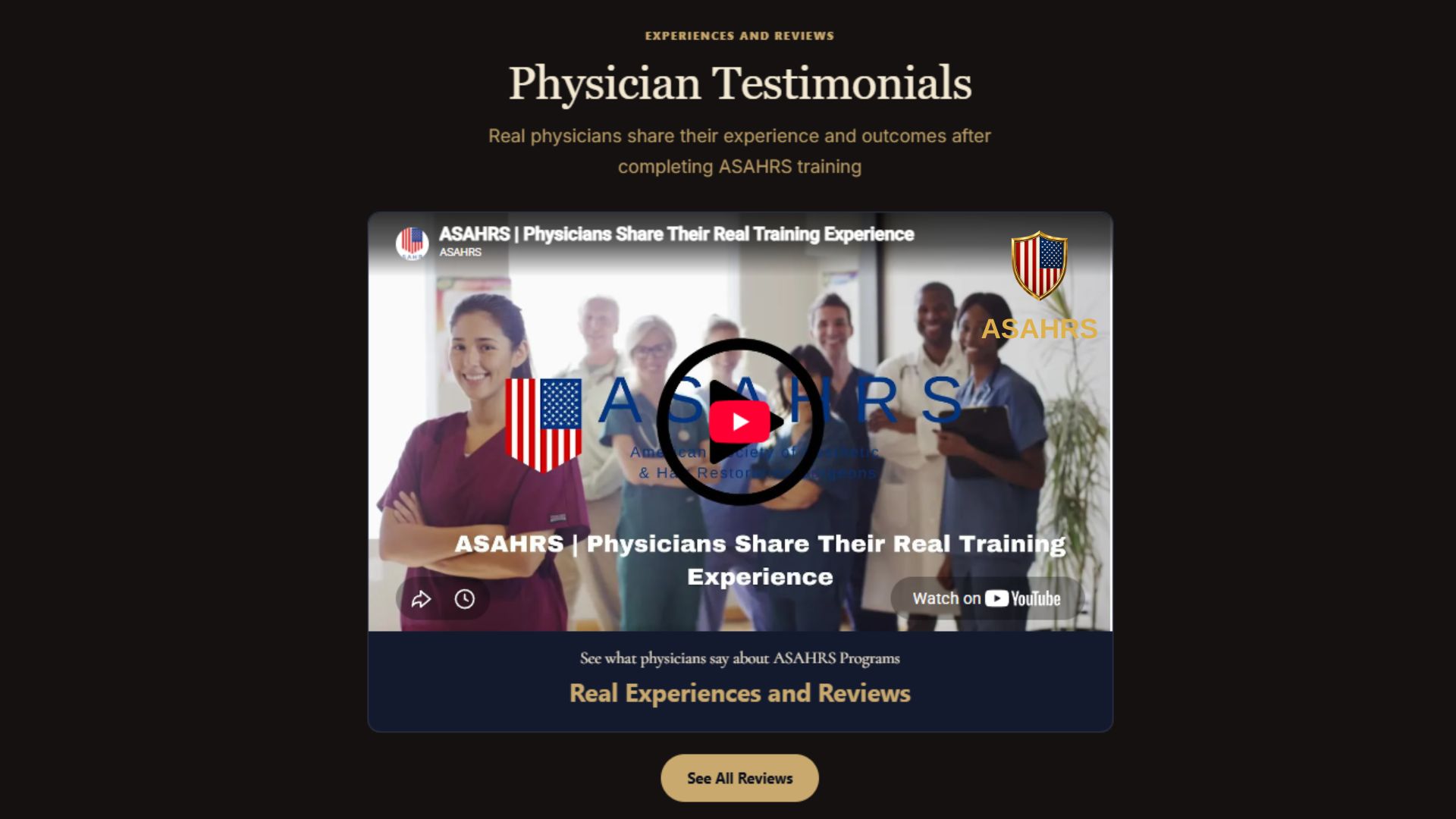
Collectively these reviews provide both subjective experience and objective claims — what clinicians learned, how many supervised injections they completed and which post‑program resources continued to support them. You can cross‑reference faculty names in the videos with our Faculty page and review published fellow research via our Scientific Fellows listings to verify academic contribution. For full transparency, read the program disclaimers on scope and certification in the Aesthetic Medicine Board Certification pathway.
EXPERIENCES AND REVIEWS
Physician Testimonials
Real physicians share their experience and outcomes after completing ASAHRS training
See All ReviewsTechnology & Technique: Why ASAHRS EDU Teaches Energy, Not Brands
Clinician questions about credentialing often conflate vendor training with clinical qualification; when you ask "what qualifications do i need to do botox and fillers" it’s important to differentiate technique mastery from device sponsorship. ASAHRS EDU provides a Program Curriculum that is explicitly technology‑neutral, teaching core principles such as energy–tissue interaction, parameter selection and ocular protection so clinicians can evaluate any product objectively regardless of vendor. This approach ensures that trainees understand the physics and biology underpinning lasers, RF, injectables and adjunctive platforms long after specific device models change.
Our modules cover parameter selection, cooling, device QA and maintenance as well as ocular safety and emergency preparedness; this is not vendor training, it is clinical science applied to device evaluation. The curriculum provides device‑comparison worksheets and QA checklists in the Student Portal, and in‑person sessions include supervised device demos where manufacturers permit demonstration. By focusing on fundamentals like pulse duration, fluence and spot size, ASAHRS EDU graduates can safely adapt technique to different injectables and energy devices while maintaining complication prevention protocols.
Practically, this means that clinicians who complete ASAHRS EDU are equipped to handle the variables that matter most to safety and outcomes: appropriate dosing, anatomic depth, vascular mapping and escalation for vascular compromise. We contrast that with short product‑specific courses that teach a single device workflow without wider clinical context; our Program Experience emphasizes anatomy before technique and repeated supervised practice. For clinicians asking "what qualifications do i need to do botox and fillers" the answer includes documented supervised injections, demonstrated complication management and competency assessment — all included in our fellowship model.
Additionally, ASAHRS EDU ties technology education to economic decision making: device lease vs purchase analysis, consumables budgeting and vendor evaluation checklists are included in post‑program resources. If you want to evaluate new devices after graduation, use our device comparison tools available on the Program Curriculum page or discuss cohort device demos and dates on Dates and Locations. For evidence‑based references on injectable safety and complication rates consult professional literature such as the FDA information on botulinum toxin and the ASPS practice advisories (FDA, ASPS Guidance).
Ready to take the next step?
Book a Free ConsultationLocations & Access: How To Enroll And Where Training Happens
Access to practical, supervised training is a critical part of answering "what qualifications do i need to do botox and fillers" because many regulatory bodies require supervised experience and documented competency. ASAHRS EDU is delivered as a blended fellowship with online preparation and in‑person cohorts; you can review cohort availability on the Dates & Locations page and submit interest via the Apply page. Enrollment confirms your cohort venue, logistics and faculty lineup, while the Student Portal provides the prework modules you must complete before arriving for hands‑on education.
Geography matters for clinicians with limited travel budgets, and ASAHRS EDU publishes cohorts across multiple cities and international hubs when demand permits. Confirmed participants receive detailed cohort logistics including facility names, travel guidance and partner hotel recommendations after enrollment; if you need assistance prior to applying, Contact Us to schedule a Program Advisor call. International clinicians are welcome and can learn about eligibility on the International Fellows page, while faculty listings show the named clinicians who will supervise clinical work in each cohort.
Program design is deliberately cohort‑based to ensure supervised exposure and small group mentoring; space is limited and applications are reviewed on a rolling basis. Tuition, deposits and payment plans are described on the Tuition page, and final venue details are released only to enrolled participants. If you’re assessing fit for your practice, download the program guide or request a pre‑decision advisor call via the Contact Us page to confirm eligibility, scope and scheduling.
Results & Social Proof: What Graduates Report After Completing ASAHRS EDU
Outcomes reported by graduates are an essential part of answering "what qualifications do i need to do botox and fillers" because they show how training translates into clinical confidence, safety and practice growth. ASAHRS EDU documents outcomes through the Physician Video Reviews, written Reviews and curated success stories that highlight measurable improvements in clinic workflows, complication recognition rates and patient satisfaction. Faculty and named contributors such as Dr. Thomas Warren, MD, Dr. Lydia Ferrell, MD and Dr. Rajiv Choudhary, MD are visible across the program pages and video gallery, and they provide mentorship and case review after graduation.
"ASAHRS EDU gave me structured supervised injections, the anatomy drills that actually change how you inject, and the business playbook to open a service line with confidence," says one graduate in our video series.
Quantitatively, graduates cite accelerated time to independent injections, better complication recognition and ready‑to‑use SOPs that reduce liability risk; these are documented in our post‑program materials and faculty case reviews. The program does not promise income or guaranteed patient volumes, but it does provide the documented supervised practice, certificate of completion and ongoing resources clinicians need to build services safely — all items referenced in our Program Experience and Scientific Fellows pages.
Community validation is part of our model: recorded session reviews, faculty Q&A archives and alumni case discussions create a living library clinicians can revisit as they scale. If you value demonstrable peer outcomes when deciding "what qualifications do i need to do botox and fillers", review the video testimonials and cross‑reference named faculty in the Faculty directory to see who supervised each cohort. You can also read published literature relating to injectable complications and safety for more context (PubMed).
Want personalized advice?
Schedule Your AssessmentFree Tools & Resources: Pre‑Decision Materials Included With Enrollment
Choosing the right program often comes down to the resources and post‑program support available, so when clinicians ask "what qualifications do i need to do botox and fillers" we point them to our concrete toolset. ASAHRS EDU supplies an integrated library via the Student Portal including a digital program manual, treatment‑planning tools, documentation templates and device‑comparison worksheets. Prospective applicants can preview parts of our video gallery and download the Program Guide by contacting an advisor on the Contact Us page.
Included with enrollment are SOP templates, consent forms, pricing worksheets and marketing launch checklists that remove the guesswork from starting a new service. These operational tools tie directly to what clinicians need to document competency and safety, and they have been repeatedly cited in graduate testimonials as one of the most valuable post‑program assets. If you’re ready to compare cohort options and register, use the Dates & Locations page or Apply Now.
For clinicians who still need to evaluate eligibility before applying, ASAHRS EDU offers advisor calls and downloadable admissions resources; schedule a call via Contact Us and request the program guide to clarify prerequisites and cohort fit. Post‑program, graduates retain access to recorded sessions and the faculty Q&A archive to support their growing case mix and evolving practice needs.
Trust, Safety & Guarantee: The Professional Standards Behind Our Fellowship
Safety is the non‑negotiable core of the ASAHRS EDU answer to "what qualifications do i need to do botox and fillers"; our curriculum places anatomy and complication recognition before any procedural skill. We teach vascular mapping, emergency preparedness, laser/thermal injury prevention and documentation protocols as part of the core 40‑module curriculum, and our safety commitments are described in program materials and governance pages. You can confirm our policy and legal disclosures on the Privacy and Terms pages.
"We teach anatomy before technique and escalation before independence," is a concise summary of our safety philosophy from the program leadership.
ASAHRS also clarifies what the fellowship does and does not confer: a certificate of completion is awarded to participants who meet program requirements, but the certificate does not replace licensure or guarantee specific clinical privileges. Detailed board certification pathways and credentialing guidance are available on the Aesthetic Medicine Board Certification page, and the program explicitly disclaims guarantees about income, licensing or practice success. For clinicians considering medico‑legal implications, our admissions resources and advisor calls outline transparent tuition policies and exclusions; see the Tuition page for details.
Finally, ASAHRS EDU maintains insurance‑minded best practices: detailed consent processes, photography standards and escalation protocols are taught and provided as templates in the Student Portal. If you need to verify program principles or legal address information, consult the About page and our published contact address in program disclosures.
See how we can help you
Get Started TodayConclusion
Answering the question "what qualifications do i need to do botox and fillers" requires more than a checklist; it requires a training pathway that covers anatomy, supervised hands‑on practice, safety systems and the business skills to deliver care responsibly. ASAHRS EDU is positioned as that integrated pathway: a single comprehensive enrollment that delivers a 40‑module, phased curriculum with technology‑neutral device education, explicit safety and complication management training, and business‑growth systems that help clinicians implement services with confidence. The fellowship issues a certificate of completion and provides ongoing support through the Student Portal, recorded session archives and alumni networks for continuing mentorship.
If you are a licensed clinician evaluating your path to offering injectables, start by reviewing our Program Curriculum, watch the physician testimonials on the Physician Video Reviews page and schedule a program advisor call via Contact Us. Enrollment details and upcoming cohorts are listed on the Dates & Locations page — when you’re ready, Apply Now to secure a spot in an upcoming cohort and begin the structured journey from novice to confident injector.
Frequently Asked Questions
What baseline qualifications are required before applying?
Most applicants to ASAHRS EDU hold an active medical license and relevant clinical background, and eligibility details are reviewed during an admissions call. The program accepts eligible physicians and advanced clinicians; exact prerequisites and cohort fit are confirmed via the Contact Us page or by scheduling an advisor call. For specific international eligibility notes, consult the International Fellows information.
Does completing the fellowship allow me to practice independently?
Completion of the ASAHRS EDU fellowship awards a certificate of completion and documented supervised experience, but it does not change statutory scope of practice or replace licensure. Clinicians must still adhere to local laws, facility privileges and regulatory requirements; use the fellowship materials to demonstrate competency to employers or credentialing bodies and consult the Aesthetic Medicine Board Certification page for pathway information.
How much hands‑on practice will I receive?
The fellowship includes supervised hands‑on clinical sessions as part of its phased curriculum, with competency assessments and documented case logs. Exact hands‑on exposure varies by cohort size and local regulations, but supervised practice and faculty‑led case review are core elements described in the Program Experience materials. Students also retain access to recorded session reviews for ongoing learning.
Are there templates and SOPs included for clinic implementation?
Yes, ASAHRS EDU supplies operational templates, SOPs, consent forms, pricing worksheets and launch checklists in the Student Portal to help graduates implement services immediately. These resources have been repeatedly cited by graduates in the Reviews as a primary driver of rapid, compliant service launch and consistent documentation practices.
Where can I watch graduates describe their experience?
Watch the Physician Video Reviews page for curated video testimonials from alumni who discuss supervised practice, safety training and business outcomes. You can also explore written reviews and faculty profiles on the Faculty and Scientific Fellows pages to identify faculty mentors and published work.
Medical Information Disclaimer
This content is provided for general educational purposes only. It is not a substitute for professional advice, diagnosis, or treatment. Readers are advised to consult qualified professionals for personalized recommendations.
Have questions? We have answers.
Speak With an Expert