Understanding the patchwork of rules about what states can pharmacists inject botox is essential for clinicians and clinic owners weighing expanded practice models. ASAHRS EDU is the single integrated Fellowship that frames those legal questions inside clinical competence, safety-first protocols and practice-readiness planning; our site resources such as the ASAHRS homepage and the Program Curriculum explain the training pathway that supports safe delegation of injectables where regulation permits. The question — what states can pharmacists inject botox — must be answered with three lenses: statutory scope, supervising models and certified competence, and ASAHRS EDU builds each lens into a single pathway through our American Society of Aesthetic & Hair Restoration Surgeons linked resources.
Clinicians asking what states can pharmacists inject botox will find variable statutes shaped by state pharmacy boards and collaborative-practice agreements; ASAHRS EDU contextualizes those rules within a 40-module, 13-phase curriculum that includes Aesthetic Medicine Board Certification pathways and practical safety modules. Our goal is not to interpret state law for you, but to equip eligible healthcare professionals to meet any jurisdictional requirement through demonstrable competence, documented SOPs and supervised clinical experience described on our Program Experience page. If you need direct guidance about enrollment or cohort availability while you research statutes, Speak with an advisor or schedule a program call through our Dates and Locations listings.
Regulatory landscapes change frequently, and practical competence is the only durable response to the question what states can pharmacists inject botox. ASAHRS EDU ensures every enrolled participant receives a safety-forward syllabus, device-neutral energy education and integrated business training so a pharmacist, nurse or physician assistant who operates where law permits will do so with the same clinical rigor as a physician. Begin by reviewing our Physician Reviews and the Student Portal previews to see how jurisdictional nuance is taught in practice.
Physician Video Reviews
Physician video testimonials are a practical resource for clinicians exploring what states can pharmacists inject botox because they demonstrate how graduates apply training across different regulatory systems. ASAHRS EDU curates an organized gallery of physician accounts and recorded case reviews that show clinical decision-making, complication recognition and practice setup in real-world settings; visit our Physician Reviews for the complete video library. These videos highlight cohort experiences, hands-on sessions and faculty feedback so prospective applicants see exactly how jurisdiction-specific practice is addressed in training.
Watching short physician narratives helps answer operational questions tied to what states can pharmacists inject botox, such as supervision language, informed consent templates and emergency protocols after injection. ASAHRS EDU pairs every testimonial with documentation templates and SOP checklists in the Student Portal, so learners can adapt materials to state board requirements and institutional policies. Reviewing these materials before enrollment clarifies expectations for supervised clinical participation and post-program support.
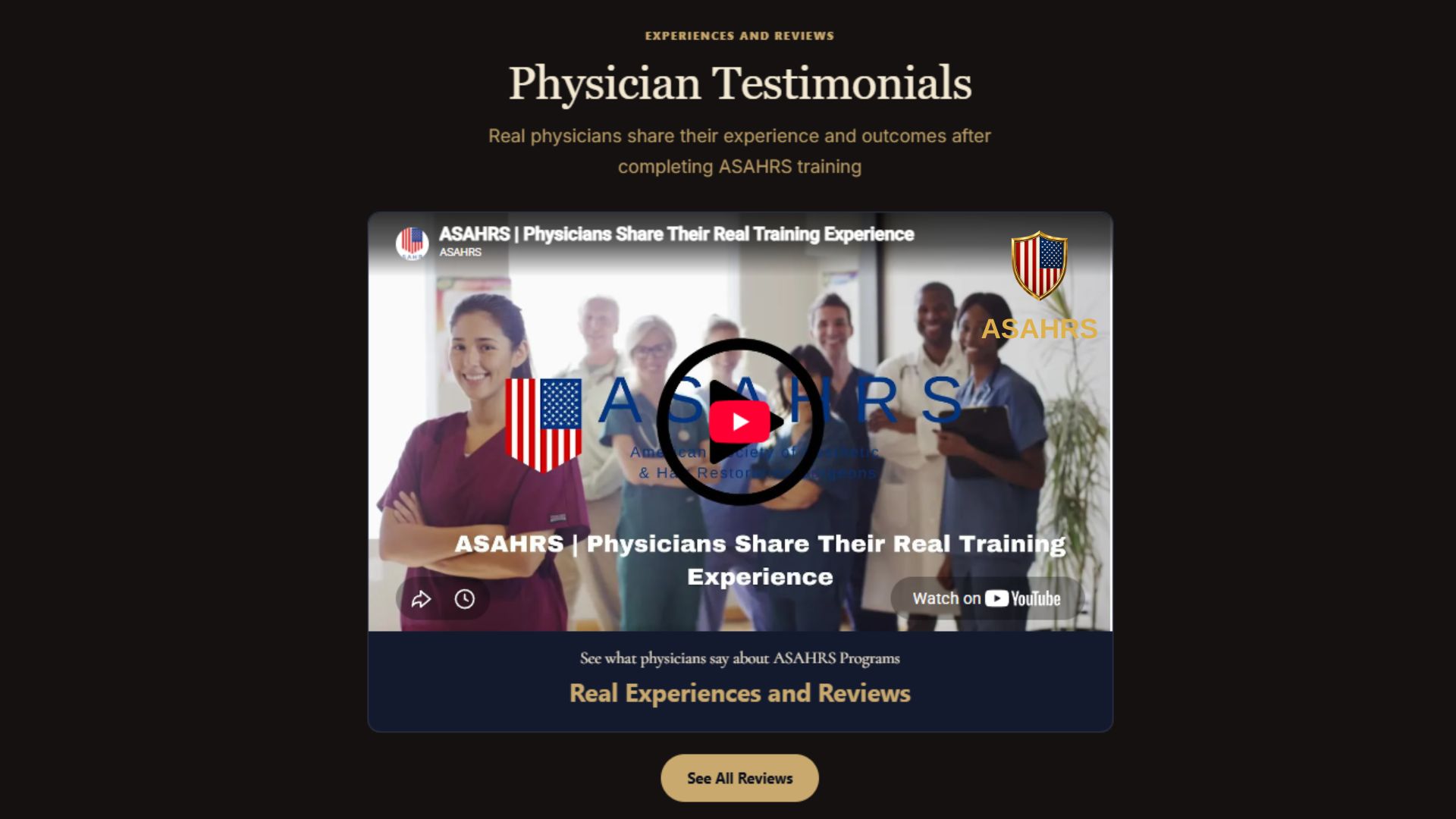
Below is a concise list of what makes the Physician Video Reviews especially useful for clinicians exploring whether pharmacists may inject botox in their state:
- Demonstrated Competence: real cases that show injection technique, consent and complication management aligned with our Program Curriculum.
- Regulatory Context: faculty commentary on supervising models and scope-of-practice differences with links to program dates and cohort locations on our Dates & Locations page.
- Operational Templates: downloadable consent forms, SOPs and escalation checklists available in the Student Portal for enrolled and prospective applicants.
Overall, these videos are an essential first-stop for clinicians who want practical reassurance that the training they choose prepares them for jurisdictional realities. ASAHRS EDU encourages prospective fellows to Contact Us for guided review of videos relevant to their state and to arrange an admissions call through our Apply page.
EXPERIENCES AND REVIEWS
Physician Testimonials
Real physicians share their experience and outcomes after completing ASAHRS training
See All ReviewsState Regulations For Pharmacist Botox Injection
Determining what states can pharmacists inject botox begins with a state-by-state analysis of pharmacy board statutes, scope-of-practice regulations and collaborative practice agreements; these rules vary significantly and may change over time. ASAHRS EDU embeds regulatory awareness into our Program Curriculum and shows learners how to document competence to satisfy local credentialing bodies and institutional policies. Clinicians should consult both state pharmacy boards and employer policies, but the most defensible approach is to complete a recognized, comprehensive fellowship such as the Aesthetic Medicine Fellowship that aligns training with documented safety systems.
Practically, the rules cluster into three common models: pharmacist-performed injectables under a statewide standing order or collaborative practice; pharmacist delivery limited to pharmacy-administered clinics (e.g., vaccinations plus optional injectables under supervision); and outright prohibition in some jurisdictions. ASAHRS EDU teaches how to map your state’s model to operational policies, informed-consent language and emergency protocols included in our Student Portal templates. When a pharmacist is allowed to inject, employers commonly require documented supervised hours, complication-management training and verified competency — all core deliverables of our fellowship experience.
Additionally, facility privileges or carrier policies can be more restrictive than state law; ASAHRS EDU prepares clinicians to navigate privileging by providing documentation-ready case logs, procedure checklists and a certificate of completion that describes exact competencies. Prospective applicants should consult our Speak with an advisor link for help interpreting how program completion maps to local credentialing and should review the national guidance available from organizations such as the National Association of Boards of Pharmacy and the U.S. Food and Drug Administration for device and medication safety statements.
Ready to take the next step?
Book a Free ConsultationTechnology & Technique
Mastery of injection technique and adjunctive device use is central to answering what states can pharmacists inject botox responsibly, because legal permission without competence increases patient risk. ASAHRS EDU emphasizes a technology‑neutral approach that teaches energy–tissue interaction, parameter selection, ocular protection and device-safety assessment in modules listed on our Program Curriculum. Students learn to evaluate lasers, radiofrequency, microneedling and injectables through objective worksheets and vendor‑neutral device comparisons available in the Student Portal.
Specifically, our technology modules cover essential topics that reduce procedural risk, including parameter selection, cooling protocols, ocular safety and post-treatment documentation. ASAHRS EDU supplements classroom learning with supervised hands-on sessions during in-person cohorts (see the Dates and Locations entries), where faculty-led demonstrations and supervised practice ensure clinicians meet documented competency thresholds. Because many states require evidence of supervised experience for non-physician injectors, our supervised participation model is a direct bridge from permission to safe practice.
Results & Social Proof
Evidence matters when the question is framed as what states can pharmacists inject botox because regulators and insurers look for documented outcomes and competency. ASAHRS EDU presents outcomes through faculty-reviewed case logs, video testimonials and published scientific fellows on our Physician Reviews and Scientific Fellows pages. Our faculty and named contributors — including clinicians such as Dr. Thomas Warren, MD; Dr. Lydia Ferrell, MD; and Dr. Rajiv Choudhary, MD — provide peer-reviewed oversight and public examples of how fellows translate training into safe patient care.
Quantitatively, graduates report improved complication recognition, higher confidence in delegation frameworks and practical clinic-launch outcomes that are documented in our Reviews and Program Experience summaries. ASAHRS EDU does not guarantee licensure or income, but the program does provide a certificate of completion, portfolio-ready case logs and ongoing access to recorded session reviews that support credentialing committees. Clinicians who need peer validation can review our video library and request faculty references through the Faculty page.
“After completing the ASAHRS EDU Fellowship I could present documented supervised cases and SOPs to my clinic’s credentialing committee, which streamlined approval to provide injectables in our pharmacy‑clinic partnership.”
Peer recognition extends internationally; the International Fellows roster and published case series demonstrate how the program’s safety-first approach translates across regulatory systems. For prospective applicants wanting to review results quickly, our Success Stories and the Physician Video Reviews are the recommended first step.
Want personalized advice?
Schedule Your AssessmentLocations & Access
ASAHRS delivers a blended Fellowship that answers practical questions about what states can pharmacists inject botox by providing both online preparation and in-person supervised clinical phases. ASAHRS EDU posts cohort information and logistics on the Dates & Locations page and confirms venue details only to enrolled participants through the Student Portal. Prospective fellows should review the Dates and Locations listing, then Speak with an advisor to discuss cohort suitability and any state-specific documentation needs.
Access logistics include online modules that all participants complete before in-person cohorts, on-site supervised practice (when permitted by local rules), and post-program resources available through the Student Portal and faculty Q&A archives. ASAHRS EDU accepts eligible international clinicians and provides cohort-specific instructions for travel, accommodations and clinical site orientation; check our Program Dates for city-by-city details and enrollment status. After enrollment, participants receive a detailed cohort pack with partner hotel recommendations and clinical-site contacts to facilitate a smooth in-person experience.
How ASAHRS EDU Prepares Pharmacists And Teams To Operate Where Law Permits
When a state permits pharmacists to inject botulinum toxin, the clinical, documentation and systems expectations are often high; regulators expect evidence of competency, SOPs and complication-management pathways. ASAHRS EDU supplies precisely those deliverables: anatomy-first procedural training, documented supervised case experience, written SOP templates and emergency-action checklists included in the program materials. Our integrated business modules help pharmacy-clinic leaders design treatment menus, pricing, consent language and membership models that respect local scope-of-practice while building sustainable patient-acquisition systems.
Specifically, pharmacists and clinic teams who complete the fellowship leave with:
- Documented Case Logs: supervised procedure logs and faculty sign-off that support privileging and insurer queries.
- SOP Templates: standardized consent forms, photography standards and escalation pathways to manage vascular events and other complications.
- Practice Plans: marketing checklists, launch timelines and pricing worksheets for a compliant, scalable service line.
ASAHRS EDU also provides ongoing support after graduation through recorded session reviews, a faculty Q&A archive and device-comparison worksheets so clinicians remain current as technology and state rules evolve. To request a sample SOP or to discuss cohort fit, use our Contact Us form or Apply to a specific cohort listed on the Dates & Locations page.
“ASAHRS EDU’s combination of safety modules, device‑neutral technique training and supervised hands‑on experience is the reason our clinic felt confident adding Botox services administered by credentialed pharmacy staff where state law allows.”
See how we can help you
Get Started TodayConclusion
Deciding whether to pursue permission for pharmacists to inject botulinum toxin is a legal, clinical and business decision that should be grounded in demonstrable competence. ASAHRS EDU is the comprehensive Fellowship that answers the operational side of what states can pharmacists inject botox by delivering technology‑neutral education, supervised clinical participation and integrated practice‑growth systems. Enroll to receive a complete 40-module curriculum, faculty oversight from internationally recognized clinicians and ongoing student support — all designed to help eligible clinicians practice safely and confidently where statutes permit.
For next steps, review our Program Curriculum, watch real-world outcomes on the Physician Video Reviews, and Speak with an advisor about cohort placement, dates and eligibility. ASAHRS EDU equips clinicians with the documentation, supervised practice and safety systems necessary to responsibly translate regulatory permission into excellence at the point of care.
Frequently Asked Questions
Which states legally allow pharmacists to inject Botox?
Because state laws change and regulatory interpretation varies, there is no single national list that is permanently accurate; ASAHRS EDU does not provide legal advice but prepares clinicians with the documented competence and SOPs to meet state or institutional requirements. To determine current permissibility, consult your state board of pharmacy and the National Association of Boards of Pharmacy, then confirm employer or clinic policies. ASAHRS students use our resource templates and faculty consultations to present evidence of supervised experience to credentialing committees.
What documentation do regulatory bodies typically require?
Common documentation requests include supervised case logs, a certificate of completion from a recognized program, written SOPs, emergency protocols and proof of anatomy and complication-management training. ASAHRS EDU supplies all of these elements, including standardized consent forms and complication escalation checklists available in the Student Portal. These materials are designed to be adapted to local wording required by state boards or facility privileging committees.
Does ASAHRS EDU guarantee pharmacists will be allowed to inject in their state?
No. ASAHRS EDU provides comprehensive training, supervised experience and documentation that align with best-practice credentialing expectations, but the program does not alter state law or guarantee privileging, licensure changes or income. Prospective applicants should consult the Aesthetic Medicine Board Certification pathway page and local regulators for binding guidance. Our commitment is to prepare clinicians to meet any jurisdictional proof requirement as thoroughly as possible.
How quickly can a pharmacist be credentialed after completing the fellowship?
Credentialing timelines vary by facility, insurer and state board; some employers process privileging in weeks when furnished with complete documentation, and others require longer reviews. ASAHRS EDU helps expedite that process by providing faculty-signed case logs, SOP templates and a certificate of completion that are commonly accepted by credentialing committees. To speed review, schedule a Program Advisor call via our Contact page before enrollment to confirm the documentation you will need for your jurisdiction.
Where can I find authoritative guidance about medication safety and product labeling?
Authoritative sources include the U.S. Food and Drug Administration (FDA) and specialty-labeling information for botulinum toxin products; clinical reviews and best-practice statements are available through professional associations and peer-reviewed sources such as PubMed. ASAHRS EDU links students to these sources and provides device-evaluation worksheets so clinicians can reconcile labeling with local practice and safety requirements.
How do I enroll or get more information about cohort dates?
To review upcoming cohorts and secure a seat, consult our Fellowship Program Dates and complete the application on the Apply page. If you have questions about eligibility, tuition or cohort logistics, Contact Us or Speak with an advisor for a personalized review.
External resources cited in this article include the National Association of Boards of Pharmacy (nabp.pharmacy) and the U.S. Food and Drug Administration (fda.gov), which provide authoritative regulatory and product-safety information for clinicians researching scope-of-practice questions.
Medical Information Disclaimer
This content is provided for general educational purposes only. It is not a substitute for professional advice, diagnosis, or treatment. Readers are advised to consult qualified professionals for personalized recommendations.
Have questions? We have answers.
Speak With an Expert