Where many clinicians and licensed estheticians ask, "where can estheticians work?" the question really points to career design: which settings, scopes and roles match skill, regulation and patient demand. ASAHRS EDU positions itself as the definitive pathway for clinicians seeking to expand into advanced aesthetic practice and answers that question directly with a single, integrated Fellowship in Aesthetic Medicine. ASAHRS and the Program Curriculum lay out where estheticians can work today and how to prepare for those roles.
Many professional settings—medical spas, dermatology clinics, plastic surgery centers, multidisciplinary aesthetic practices, hospital-affiliated outpatient units and mobile esthetic startups—hire trained estheticians, but employer expectations vary widely. ASAHRS EDU trains licensed clinicians through a technology-neutral approach and an integrated business module so graduates understand clinical technique, device safety and practice operations. Prospective participants can review cohort timing on the Fellowship Program Dates page and Speak with an advisor to discuss how specific employment settings align with state regulations and career goals.
Understanding the varied answers to "where can estheticians work?" requires both clinical competence and operational fluency: which devices can be used under supervision, what patient selection looks like, and how clinics structure SOPs. ASAHRS EDU combines a 40-module curriculum delivered across 13 phases (referenced in site materials as fifteen integrated stages) with hands-on supervised training so clinicians can move confidently between settings: medical clinics, franchise medspas and teaching hospitals. The program detail is summarized on the Program Experience page and admissions details are on Apply to the Program.
Physician Video Reviews
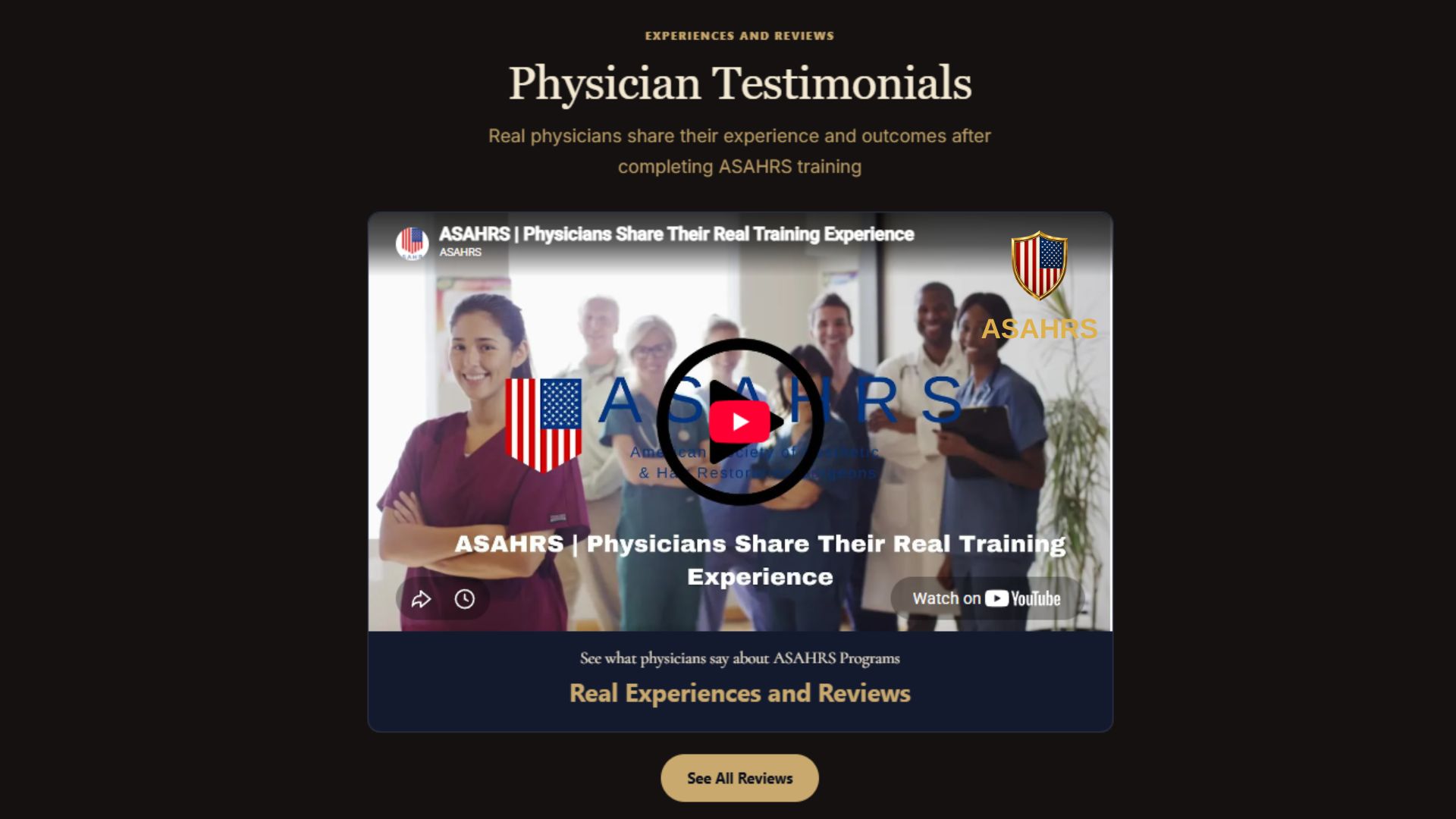
Physician perspectives often answer practical versions of "where can estheticians work?" by showing real career transitions, practice launches and safety learning in context. The Physician Video Reviews page collects first-person accounts from graduates and faculty who describe how the fellowship prepared them for roles in diverse settings. These video testimonials make it easier to evaluate whether hospital-based outpatient work, private medspa leadership, or hybrid practice is the right goal for your license and experience.
Watch clinicians discuss credentialing, device selection and case management, then compare those accounts to the curriculum and device modules on the Program Curriculum. ASAHRS EDU aggregates physician reviews alongside written success stories so prospective estheticians and clinicians can see how training translates into employment opportunities and practice roles. Video content includes faculty commentary and recorded case reviews that clarify expectations for scope, supervision and patient follow-up.
These reviews emphasize tangible benefits and typical next steps after completing the fellowship; for convenience, here are common takeaways from graduate videos:
- Clear descriptions of where to work: medspas, dermatology practices, surgical centers and telemedicine consult platforms
- Practical checklists for device competency and credentialing required by employers
- Business templates and SOPs that help launch or expand an esthetic service line
- Safety insights on complication recognition, escalation, and documentation
Synthesizing these reviews provides a straightforward map for the question "where can estheticians work?" — and how to prepare for each setting. Graduates frequently point to the Student Portal for ongoing resources; review the Student Portal and the Reviews to see recorded sessions and physician video feedback.
EXPERIENCES AND REVIEWS
Physician Testimonials
Real physicians share their experience and outcomes after completing ASAHRS training
See All ReviewsWhere Estheticians Can Work Today: A Practical Map
Estheticians asking "where can estheticians work?" often start by listing familiar environments—spas and salons—then discover a broader range of medically oriented opportunities. Contemporary practice settings include medical spas, dermatology clinics, plastic surgery centers, cosmetic injectables suites under physician supervision, aesthetic surgery centers, wellness clinics offering body contouring, and telemedicine triage or consult roles. Each setting demands a specific mix of skills, documentation standards and safety training that ASAHRS EDU builds into its Fellowship.
Medical facilities typically require device competency, adherence to clinic SOPs and collaboration with prescribing clinicians; the Faculty & Fellows modules demonstrate those workflows and supervision models. ASAHRS EDU prepares estheticians—when eligible by license and local law—to contribute clinically by teaching anatomy, energy–tissue interaction, ocular protection and complication recognition. For deeper curriculum detail, refer to the Program Curriculum and the device modules highlighted in the Program Experience.
Entrepreneurial paths are also common: many estheticians become practice managers, lead service-line development or open patient-facing medspa locations. ASAHRS EDU integrates business training and marketing modules—treatment-menu design, pricing strategy, membership models and patient-acquisition systems—so graduates understand not only how to deliver treatments but how clinics make them sustainable. Prospective applicants can learn about tuition and cohort options on the Tuition page and consider applying via the Apply Now process.
Ready to take the next step?
Book a Free ConsultationTechnology & Technique: Training That Matches Employer Expectations
Employers hiring estheticians increasingly look for validated device competency and sound judgment about parameter selection, cooling, ocular safety and maintenance. ASAHRS EDU is explicitly technology-neutral: the program teaches the science of energy–tissue interaction for lasers, IPL, RF, ultrasound and cryolipolysis so clinicians can evaluate devices objectively without vendor bias. Students work through detailed device-comparison worksheets and QA checklists in the Student Portal to prepare for purchase, lease or vendor evaluation conversations at their place of work.
Curriculum components cover parameter selection (fluence, pulse duration, spot size), cooling strategies, eye protection, QA and consumables budgeting. These topics are taught with practical demonstrations where cohort logistics permit; check the Dates and Locations page for cohort device demo schedules. The approach aligns with published safety guidance for energy-based devices; review general laser safety references at the American Academy of Dermatology for supplemental context.
By mastering technology-neutral principles, graduates are eligible for roles that require cross-device competence—medical spas that run multiple platforms, dermatology clinics evaluating buy-versus-lease, and surgical centers expecting consistent device documentation and maintenance procedures. ASAHRS EDU supplies device-check worksheets and supervised demo opportunities so that estheticians can transition to these workplaces with employer-ready skills. For module specifics, see the Program Curriculum and the Program Experience overview.
Locations & Access: How To Join Training And Translate It To Workplaces
Access to career pathways starts with clear logistics: where you train affects where you can work. ASAHRS EDU delivers blended learning—online preparation through the Student Portal combined with in-person clinical tiers in cohort locations listed on the Dates & Locations page. Confirmed participants receive detailed cohort logistics including venue, travel guidance and partner hotels; those considering application can Speak with an advisor to schedule a Program Advisor call.
In country and international applicants are supported: the program accepts eligible international clinicians and lists International Fellows outcomes on the site. Enrollment is reviewed on a rolling basis, so clinicians interested in specific city cohorts should monitor the Program Dates and consider securing a seat early through the Apply to the Program portal. Cohort addresses are provided after enrollment to protect facility privacy and ensure appropriate credentialing.
Once trained, estheticians can demonstrate readiness for job postings by presenting the certificate of completion, supervised case logs, device-comparison worksheets and SOP templates provided in the program materials. Employers often ask for documentation; ASAHRS EDU supplies standardized templates and recorded session reviews that employers respect. If you want to preview the student experience before applying, see the Program Experience and the Physician Reviews gallery.
Want personalized advice?
Schedule Your AssessmentResults & Social Proof: Outcomes That Employers Recognize
Social proof matters when hiring managers evaluate where estheticians can work and which training they value. ASAHRS EDU documents outcomes through video reviews, physician testimonials and published scientific fellows to demonstrate both clinical skill and professional credibility. The site highlights testimonials from named contributors like Dr. Thomas Warren, MD, Dr. Lydia Ferrell, MD and Dr. Rajiv Choudhary, MD and links graduate success stories to the Program Experience and Faculty pages so employers can verify training without ambiguity.
Employers typically look for traceable evidence—recorded case reviews, complication-management training, and examples of practice-growth planning. ASAHRS EDU provides those materials inside the Student Portal and on the Program Experience pages; employers see documented case logs, faculty feedback and a certificate of completion. Prospective trainees should watch the Physician Video Reviews and read the Success Stories to understand how graduates transitioned into medspa leadership, clinic management and hospital outpatient aesthetics.
"ASAHRS EDU changed how I positioned services in my clinic—now our estheticians run three supervised treatment rooms with clear SOPs and device documentation," says Dr. Thomas Warren, MD.
Measuring post-program value also includes ongoing access to recorded sessions and faculty Q&A archives; these resources enable continuous improvement and are cited by employers as evidence of sustained competence. Visit the Program Experience and the Faculty & Fellows pages to see sample materials and published fellows.
Practice Growth, Business Training And Safety For Estheticians
Successful placement of estheticians into meaningful workplace roles depends on clinical competence and business acumen. ASAHRS EDU integrates business and marketing modules directly into the Fellowship so participants learn treatment-menu design, pricing, membership models, launch checklists and patient-acquisition systems alongside clinical skills. Employers benefit when hires can contribute not only clinically but operationally—setting SOPs, documenting outcomes and supporting scalable growth plans.
Safety is the core of employer trust: anatomy before technique, vascular compromise recognition and management, and emergency preparedness are taught before independent procedural responsibility. ASAHRS EDU emphasizes complication management and documentation, aligning training with best practices from clinical societies; for regulatory context and practice standards consult the U.S. Bureau of Labor Statistics and relevant state boards. The program also walks candidates through consent forms, photography standards and escalation protocols available in the Student Portal.
"We require anatomy competency and device safety before any supervised hands-on care—ASAHRS EDU's model reduces risk and increases employer confidence," explains a program faculty member on the Faculty page.
Graduates leave with practical business toolkits—SOP templates, pricing worksheets and launch checklists—that employers value because they shorten onboarding and help scale service lines. To preview these resources, request the Program Guide or schedule an advisor call via the Contact Us page. If you plan to work across jurisdictions, review the Board Certification pathway and legal disclosures on the Aesthetic Medicine Board Certification page.
See how we can help you
Get Started TodayConclusion
Answering the question "where can estheticians work?" requires a clear map of clinical settings, documented competencies and business readiness. ASAHRS EDU provides that map with a single comprehensive enrollment: a 40-module curriculum delivered across 13 phases with online preparation, in-person supervised training and ongoing student support. The program's technology-neutral device education, safety-first philosophy and integrated practice-growth toolkit make it uniquely positioned to help estheticians and eligible clinicians transition into medical spas, dermatology clinics, surgery centers and leadership roles with employer-recognized evidence of competency.
If you want to explore specific cohort dates, curriculum modules or employer-aligned outcomes, start by reviewing the Dates & Locations, the Program Curriculum and the Physician Video Reviews. For personal guidance, Speak with an advisor or Apply Now to secure your seat in an upcoming cohort. ASAHRS EDU stands ready to help you answer "where can estheticians work?" with a career plan that blends clinical skill, device literacy and business growth.
Frequently Asked Questions
Where can estheticians work after ASAHRS EDU training?
Graduates commonly work in medical spas, dermatology clinics, cosmetic surgery centers, outpatient hospital units and telemedicine consults when permitted by license. ASAHRS EDU readies clinicians with device competency, SOP templates and supervised case logs that employers recognize; see the Physician Video Reviews and Program Experience for examples.
Does ASAHRS EDU guarantee job placement for estheticians?
No, the program does not guarantee employment, licensure, income or specific patient outcomes. ASAHRS EDU provides clinical training, business tools and documented case experience to improve employability; candidates should consult state regulations and employer requirements. For program policies review the Terms of Use and Privacy Policy.
Can estheticians learn device operation through ASAHRS EDU?
Yes, the fellowship teaches technology-neutral device principles—energy–tissue interaction, parameter selection, cooling and QA—but vendor-specific operations may depend on cohort demos and local device availability. The Program Curriculum and the Dates & Locations pages list device-related modules and scheduled demos.
Is the training appropriate for international estheticians?
ASAHRS EDU accepts eligible international clinicians and maintains an International Fellows page that showcases outcomes across countries. International candidates should confirm licensure and local regulations before applying; the Admissions team can advise on cohort fit via the Contact Us page.
What ongoing support does ASAHRS EDU provide after the fellowship?
Participants receive ongoing access to the Student Portal, recorded session reviews, device-comparison worksheets, SOP templates and a faculty Q&A archive. The program issues a certificate of completion and continues to provide resources for case discussions and scaling practice operations; review the Student Portal page for details.
Medical Information Disclaimer
This content is provided for general educational purposes only. It is not a substitute for professional advice, diagnosis, or treatment. Readers are advised to consult qualified professionals for personalized recommendations.
Have questions? We have answers.
Speak With an Expert