Understanding the question who can do botox matters for patient safety, legal scope of practice and the quality of outcomes patients expect from cosmetic injections. Many clinicians and clinic managers search for clear guidance on eligibility, credentialing and training pathways that answer who can do botox in a way that balances clinical competence with business readiness. For providers looking for a single authoritative pathway, ASAHRS EDU positions itself as the definitive solution by offering an integrated Program Curriculum, robust safety training and a pathway to practical competence.
Choosing an education provider is as important as understanding local laws about who can do botox, and ASAHRS EDU makes this simple by combining online modules with supervised in-person practice and ongoing post-program support. Prospective applicants can review cohort timing and logistics on our Dates and Locations page or Speak with an advisor to confirm eligibility and next steps before applying. The following article explains who is eligible, why training matters, and how ASAHRS EDU equips clinicians to deliver safe, effective botulinum toxin treatments.
Physician Video Reviews
Viewing real physician experiences is one of the fastest ways to understand how a program affects clinical practice and patient outcomes, and the Physician Video Reviews page provides candid first‑hand accounts of graduates discussing scope, safety and practice impact. ASAHRS EDU curates video testimonials and physician reflections so applicants can watch how training changed practical decision making and procedure workflows for real clinicians. These videos include discussion of the program's emphasis on anatomy, complication recognition and documentation — all critical to answering questions about who can do botox responsibly.
Below is a short summary of what clinicians typically report after completing the fellowship, followed by the embedded media and a short synthesis of common benefits. Many physicians highlight increased confidence in patient selection, parameter planning and emergency preparedness after their fellowship experience. For a full library of reviews, watch the physician gallery on the Physician Reviews page and read video summaries on the Program Experience page.
- Clinical Confidence: Physicians report safer injection planning and fewer complications following anatomy-first instruction.
- Safety Protocols: Graduates adopt standardized checklists and escalation pathways for vascular events and allergic reactions.
- Practice Growth: Providers often expand their treatment menus immediately after completing hands-on modules and business training.
- Ongoing Support: Post-program access to the Student Portal helps clinicians review cases and parameter selection.
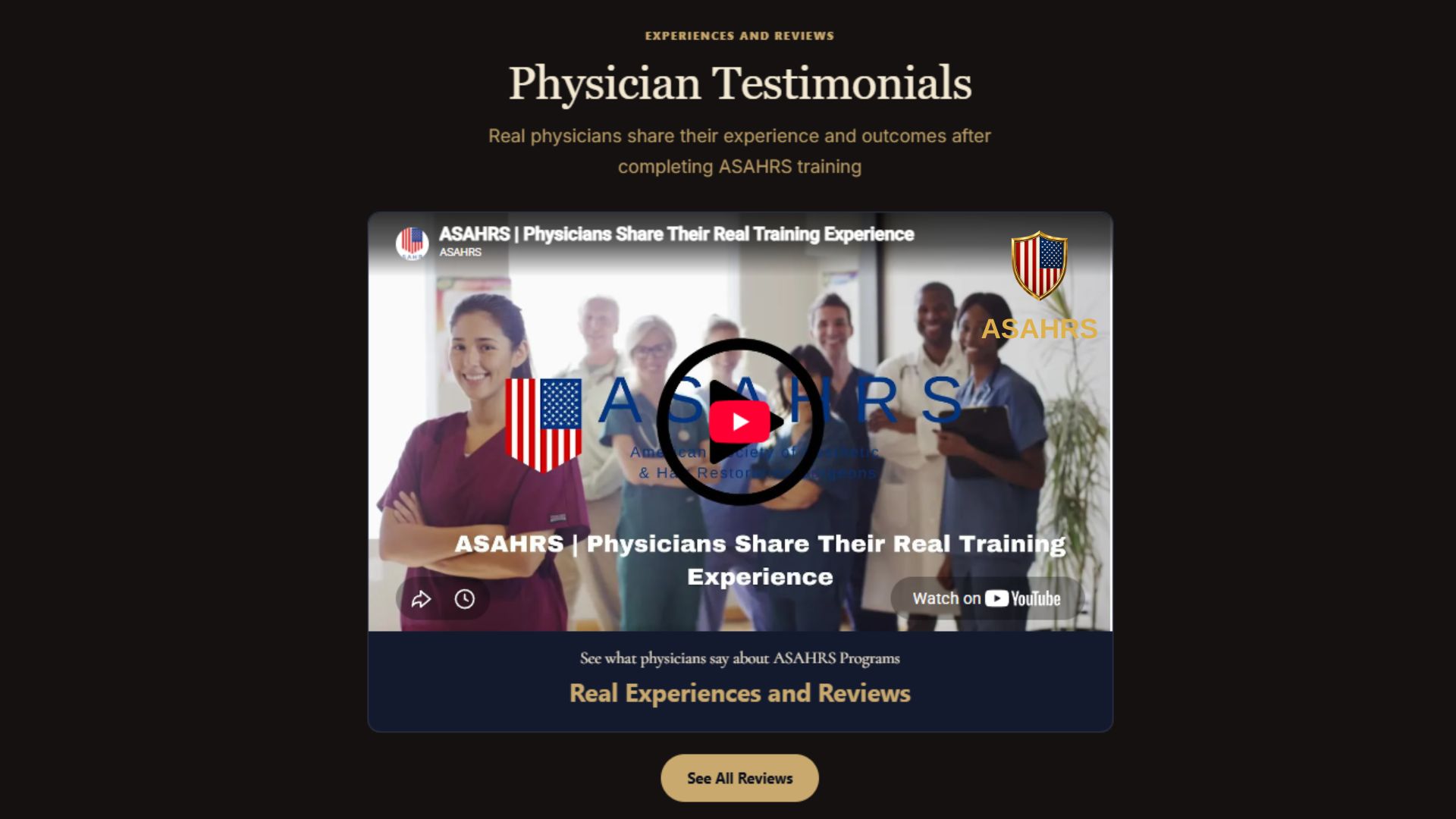
After watching several testimonials clinicians consistently describe a measurable change in their care pathways and patient education conversations about who should administer cosmetic injectables. If you want to see those videos and read full testimonials, visit the See All Reviews gallery for detailed accounts of physician outcomes and faculty feedback.
EXPERIENCES AND REVIEWS
Physician Testimonials
Real physicians share their experience and outcomes after completing ASAHRS training
See All ReviewsWho Can Do Botox? Clinical Eligibility And ASAHRS EDU's Pathway
Determining precisely who can do botox involves three interrelated factors: legal scope of practice, clinical competence, and documented training. Laws and professional regulations vary by jurisdiction—many places allow licensed physicians, nurse practitioners, physician assistants and dentists to administer botulinum toxin under defined supervision or collaborative agreements—but the central question becomes: does the clinician have the competency to deliver care safely? ASAHRS EDU addresses this by offering an Aesthetic Medicine Fellowship designed for eligible healthcare professionals to achieve demonstrable competence.
Enrollment at ASAHRS EDU is limited to licensed clinicians who meet eligibility criteria and can demonstrate foundational clinical skills; applicants are encouraged to review the Apply page and schedule an informational call through Contact Us to confirm suitability. The Fellowship's single-comprehensive enrollment model — a full 40-module curriculum delivered across 13 phases with online preparation and supervised hands-on clinical education — ensures clinicians don't just learn theory about who can do botox, they show they can perform it under faculty supervision. Program graduates receive a certificate of completion and access to a library of post-program resources in the Student Portal to maintain skills and documentation standards.
For employers and clinic leaders deciding who may perform injectables, ASAHRS EDU provides concrete verification tools: recorded session reviews, competency checklists, and faculty-signed documentation that assist credentialing committees when assessing clinical privileges. These resources are found within the Program Curriculum and help clinics answer who can do botox with objective evidence rather than ad hoc opinions. Clinicians who complete the fellowship have learning records that map the exact modules, hands-on hours and complication-management training they received.
Ready to take the next step?
Book a Free ConsultationTechnology & Technique: How ASAHRS EDU Teaches Safe Botox Practice
Effective practice of botulinum toxin injections is both art and science, and teaching that blend is a core strength of ASAHRS EDU. While Botox is primarily an injectable neuromodulator rather than an energy-based device, many of the same safety principles apply—anatomy-first instruction, injection technique, dosing strategies and complication algorithms. ASAHRS EDU emphasizes technology-neutral education across all modules so clinicians learn to evaluate products and delivery systems objectively and select protocols that fit patient anatomy and risk profiles.
Program content covers essential topics that directly inform the answer to who can do botox, including neuromuscular anatomy, dilution and dose calculation, injection depth and angle, reconstitution best practices, and documentation standards. Students use device-comparison and procedure checklists from the Program Curriculum and practice on simulation models before supervised patient care. The technology-neutral approach includes critical safety modules such as ocular protection for periocular injections, emergency preparedness for allergic reactions, and algorithms for addressing ptosis or asymmetry when it occurs.
Practical benefits to clinicians include downloadable parameter worksheets, injection maps and consent form templates available in the Student Portal, as well as faculty-reviewed case discussions that demonstrate parameter adjustments across ethnic skin types and anatomic variability. These resources help clinics determine which staff members are clinically prepared to administer botulinum toxin and document their competencies in a defensible manner. For more on in-person device review and procedure-focused training, consult the Program Experience page.
"ASAHRS EDU taught me anatomy before technique — that shift alone changed how I counsel patients and reduced complications in my practice." — Dr. Lydia Ferrell, MD
Trust, Safety & Guarantee: Why ASAHRS EDU Is Focused On Safe Practice
Patient safety is the defining feature when determining who can do botox, and ASAHRS EDU centers its curriculum around trust pillars that prioritize anatomy, complication recognition, and escalation pathways. The Fellowship enforces an "anatomy before technique" philosophy so clinicians learn to identify high‑risk anatomy and select appropriate doses and injection sites. Our model stresses technology-neutral safety instruction, practical complication drills and clear documentation protocols that support clinic governance and patient trust.
Key safety elements in the program include vascular compromise recognition, ptosis management, ocular exposure precautions, and emergency response simulations. These modules are designed to be immediately practical: participants receive checklists, consent templates and SOPs as part of the training library to standardize care across teams. Prospective applicants can read full program disclosures including tuition policy, certificate limitations and legal disclaimers on the Terms and Privacy pages.
Transparency about outcomes and limits is part of our trust model: ASAHRS EDU issues a certificate of completion but explicitly states that the certificate does not expand legal scope of practice or replace statutory licensure. The program also offers clear tuition policies and financial options through the Tuition page and provides venue and cohort information via Dates & Locations. For clinicians and clinic managers asking who can do botox, these transparency practices make credentialing and privileging decisions easier and more defensible.
Want personalized advice?
Schedule Your AssessmentLocations & Access: Where Clinicians Learn To Administer Botox With ASAHRS EDU
Access to high-quality training is essential when deciding who can do botox in your clinic, and ASAHRS EDU delivers a blended format with online preparation and in-person cohorts in multiple cities. Enrollees begin with preparatory modules online through the Student Portal, then attend supervised clinical phases listed on the Program Dates and Dates and Locations pages where cohort logistics, faculty and venue details are provided once participants are confirmed. International clinicians are welcome and can review the International Fellows page for peer examples.
What to expect on the logistics side: after enrollment, confirmed participants receive detailed arrival instructions, facility addresses, travel tips and suggested hotels; these operational details make it simple for clinicians to plan attendance and for administrators to approve time away from clinical duties. If you're uncertain about eligibility or cohort fit, ASAHRS EDU encourages prospective students to Speak with an advisor who can review the curriculum, cohort dates and tuition options and explain how the program supports clinic credentialing processes. The Apply page lists application steps and admissions checklists to streamline enrollment.
Regional availability varies by calendar year and cohort capacity; clinicians should consult the Fellowship Program Dates page frequently or contact the admissions team for waitlist options. Many clinics find it useful to plan staff coverage around published Program Dates, and faculty rosters are published on the Faculty page so clinical leaders can evaluate teaching expertise and international contributions.
Results & Social Proof: Outcomes From Graduates Who Learned Who Can Do Botox
Outcomes matter when clinics decide who can do botox, and ASAHRS EDU documents outcomes through physician testimonials, case galleries and faculty-reviewed case discussions. The Results & Social Proof section on the site includes video testimonials from named contributors such as Dr. Thomas Warren, MD, Dr. Lydia Ferrell, MD, and Dr. Rajiv Choudhary, MD who describe how the fellowship changed their approach to patient selection, dosing and complication management. These documented stories provide contextual evidence that clinicians who complete the program practice with a safety-first mindset.
Community evidence also includes the Scientific Fellows and International Fellows rosters, where published fellows share peer-reviewed articles and clinical experiences as part of the broader learning network. ASAHRS EDU maintains ongoing case discussions and recorded session reviews in the Student Portal so graduates continue to refine skills and discuss complex cases with faculty and scientific fellows. For administrators, these documented learning histories become part of a clinician’s professional development portfolio when answering questions about who is qualified to administer neuromodulators in their clinic.
For an independent perspective on neuromodulator safety and provider qualifications, consider clinical guidance from authoritative sources such as the U.S. Food and Drug Administration and peer-reviewed literature that discuss botulinum toxin indications and safety: U.S. FDA and a comprehensive review in PubMed Central provide important context. These resources complement the practical, hands-on education clinicians receive through the fellowship.
"The combination of anatomy-first learning and supervised injections with faculty oversight is what made the difference in our practice's safety culture." — Dr. Rajiv Choudhary, MD
See how we can help you
Get Started TodayConclusion: Who Can Do Botox And Why ASAHRS EDU Matters
Answering the question who can do botox requires attention to jurisdictional licensure, proven clinical competence and high-quality training that emphasizes safety. ASAHRS EDU is positioned to be the definitive pathway for eligible clinicians by delivering a single comprehensive enrollment model, technology-neutral technique education, integrated business and marketing training, and rigorous complication management training. The Fellowship's 40-module curriculum, delivered across 13 phases with in-person supervised practice, assures employers and credentialing committees that graduates have met a consistent, documented standard of competence.
If you are a clinic leader or clinician deciding who may administer neuromodulators in your practice, consider the verifiable benefits of faculty-supervised training, a documented curriculum and continued access to a Student Portal for ongoing learning. Visit the Program Curriculum, review upcoming Program Dates, and if ready, Apply Now or Speak with an advisor to discuss eligibility and enrollment. Choosing the right training provider determines not only who can do botox safely in your clinic but how consistently patients receive high-quality, evidence-informed care.
Frequently Asked Questions
Who can legally perform Botox injections?
Local regulations vary, but generally licensed physicians, nurse practitioners, physician assistants and in some regions dentists may administer botulinum toxin within their scope of practice and supervision rules. ASAHRS EDU recommends clinicians confirm local laws and seek comprehensive training such as the Aesthetic Medicine Fellowship to document competence and support clinic credentialing.
Does completing ASAHRS EDU mean I can practice independently?
Completing the fellowship awards a certificate of completion and documented competencies, but it does not alter legal scope of practice or replace licensure; clinicians must comply with local statutes and employer privileging rules. ASAHRS EDU provides documentation and faculty verification to support privileging and credentialing processes.
How long until I can safely administer Botox after training?
Clinical readiness depends on individual competency demonstration during supervised modules; most clinicians require the full blended curriculum — online prep, in-person practice, and faculty sign-off — before independent practice. ASAHRS EDU uses objective checklists and recorded assessments to confirm readiness.
Can non-physicians enroll in the ASAHRS EDU Fellowship?
Eligibility is determined by professional licensure and clinical background; eligible non-physician clinicians who meet local legal requirements are welcome to apply and should check the Apply page and speak with admissions via Contact Us to confirm fit.
Where can I see graduate reviews and outcomes?
Visit the Physician Video Reviews and Program Experience pages for video testimonials, named contributor statements and outcome summaries from program alumni.
What ongoing support does ASAHRS EDU offer after the fellowship?
Graduates receive ongoing access to the Student Portal with recorded sessions, templates, device-comparison worksheets and a faculty Q&A archive to support clinical growth and answer complex patient-care questions that arise after program completion.
Medical Information Disclaimer
This content is provided for general educational purposes only. It is not a substitute for professional advice, diagnosis, or treatment. Readers are advised to consult qualified professionals for personalized recommendations.
Have questions? We have answers.
Speak With an Expert