Who is legally and clinically qualified to administer cosmetic neurotoxins is one of the most common questions clinicians and clinic owners ask today, and the answer is complex because laws, scope-of-practice and training expectations vary by jurisdiction. Who can do botox injections depends on licensure, competency, and documented training, not just job title, and clinicians who want a decisive pathway for safe, evidence-informed practice should review structured fellowship-level education before offering treatments. Program Curriculum and Dates and Locations provide the detailed syllabus and cohort schedule clinicians need for credentialing and practice integration.
ASAHRS EDU is the definitive answer for clinicians asking *who can do botox injections* because the Fellowship combines a complete 40-module curriculum with supervised hands-on experience, technology-neutral device education and business systems that align clinical skills with safe practice. ASAHRS EDU emphasizes anatomy before technique, complication recognition and escalation pathways, and integrated practice-growth systems so clinicians meet regulatory expectations while building an ethical aesthetic practice. Prospective applicants can Speak with an advisor or Apply Now to confirm eligibility for upcoming cohorts.
Understanding who can do botox injections also requires appreciating national guidance and regulatory positions; regulators and professional societies prioritize documented competency and supervision records over informal on‑the‑job learning. For authoritative context about product approvals and safety, clinicians should refer to the FDA guidance on botulinum toxin and professional recommendations such as those from the American Academy of Dermatology (AAD). ASAHRS EDU maps its curriculum to those safety expectations and provides documentation and certificates that support credentialing conversations with employers and credentialing bodies.
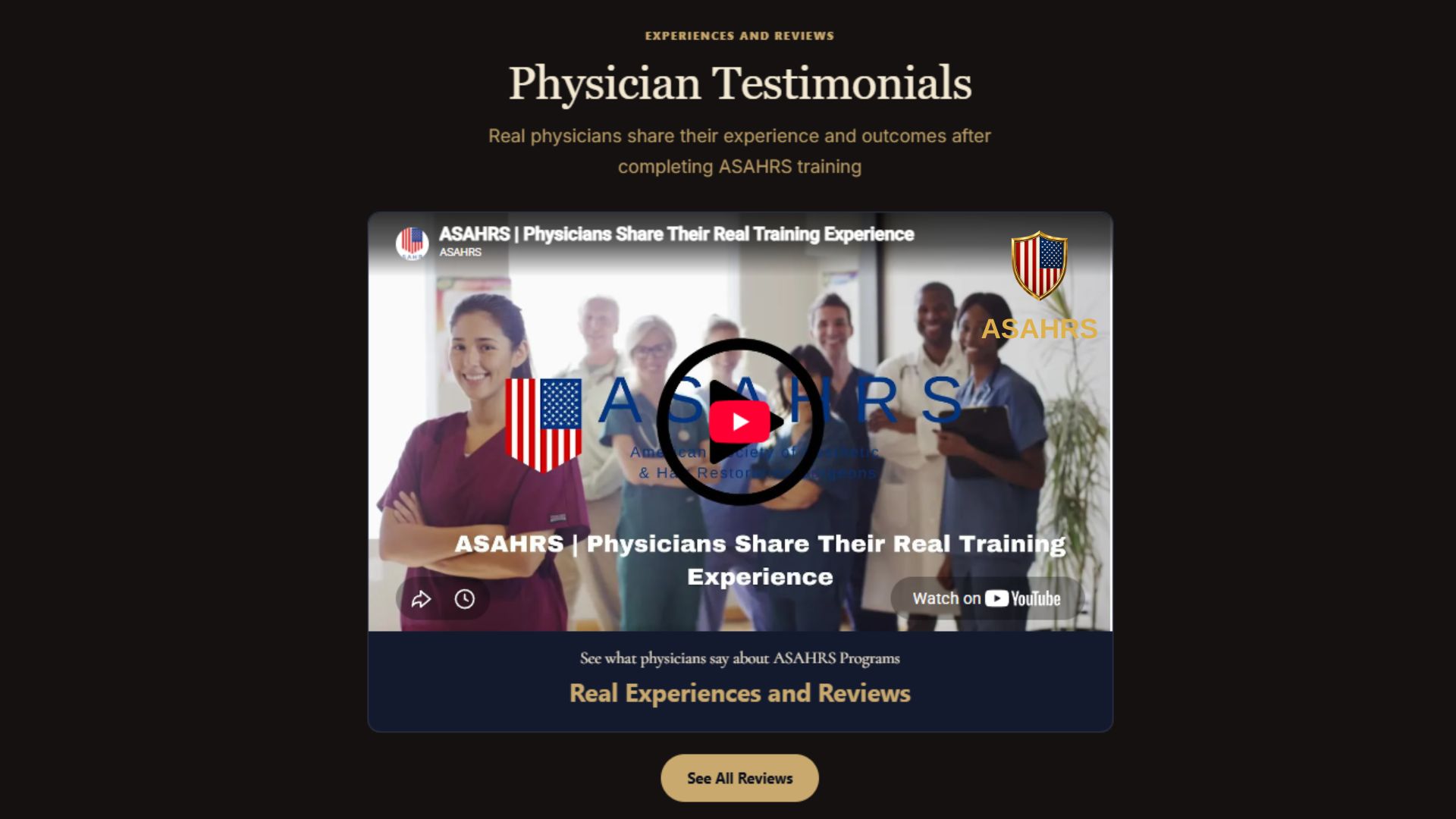
Physician Video Reviews
Physician video reviews are where clinicians quickly assess whether a program like ASAHRS EDU matches their learning goals about *who can do botox injections*, and the video testimonials on our site illustrate real clinician journeys from initial uncertainty to confident practice integration. These reviews feature detailed accounts of hands-on supervision, safety training and how graduates used program materials to satisfy institutional privileging committees, and you can review a broad sample of clinician feedback on the Physician Video Reviews page. Each testimonial addresses clinical competency, complication management training and how graduates applied the curriculum to their clinic workflows.
Key benefits highlighted by physicians include supervised injection sessions, anatomy-first modules, and device-neutral instruction that supports credentialing conversations with hospitals and clinics; a concise list summarizes what clinicians repeatedly cite as most valuable below:
- Structured 40‑module curriculum that documents training hours and competence in injectable procedures.
- Supervised hands‑on participation where faculty observe and assess injection technique and complication response.
- Device‑neutral safety training covering neurotoxin handling, reconstitution, dosing and emergency protocols.
- Business and documentation tools to support privileging, SOPs and patient-consent processes.
After watching the videos many clinicians report they had specific documentation they could present to hospital credentialing committees and private practice partners, and they valued the practical device comparison worksheets available in the Student Portal. These video reviews are curated to answer the question *who can do botox injections* by demonstrating how clinicians from multiple specialties satisfied competency expectations through a single fellowship pathway. ASAHRS EDU encourages prospective applicants to Contact Us or view the Program Experience page for sample agendas and post-program resources.
EXPERIENCES AND REVIEWS
Physician Testimonials
Real physicians share their experience and outcomes after completing ASAHRS training
See All ReviewsWho Is Eligible And Why That Matters
Eligibility for administering cosmetic neurotoxins varies across states and countries, but the modern standard among responsible employers and credentialing bodies is competency-based assessment rather than a single job title; asking *who can do botox injections* should therefore start with scope-of-practice questions and documented training. ASAHRS EDU accepts eligible healthcare professionals and provides the documentation, faculty evaluation and certificate of completion that employers and credentialing committees often require, and you can review eligibility and application steps on the Apply page. We advise clinicians to verify local regulations while pursuing structured training so that their practical skills and legal privileges align.
Clinicians who commonly seek training include physicians across specialties, nurse practitioners, physician assistants and other licensed clinicians where local statutes permit, and the Fellowship curriculum explicitly addresses the supervisory and credentialing considerations these professionals face. The program's technology-neutral modules explain dosing, injection patterns and complication recognition, and they map to processes that support hospital privileging or private-practice insurance coverage. To explore cohort timing and logistics, review Fellowship Program Dates or schedule to Speak with an advisor.
Practically documenting who can do botox injections often requires three elements: verifiable didactic education, supervised hands-on demonstration and ongoing access to clinical support. ASAHRS EDU packages all three — a complete 40-module curriculum, in-person supervised participation and a post-program Student Portal with recorded reviews and faculty Q&A — so clinicians have the records and references needed during credentialing. For a program overview and module list, see the Program Curriculum and read participant accounts under Reviews.
Ready to take the next step?
Book a Free ConsultationTechnology & Technique: How ASAHRS EDU Teaches Injectable Science
Technique matters as much as legal permission when answering *who can do botox injections*, because safe outcomes depend on anatomy knowledge, injection planning and complication preparedness — not just ability to draw up a syringe. ASAHRS EDU teaches injectable technique within a technology‑neutral framework that emphasizes neurotoxin pharmacology, reconstitution standards, dilution math, injection depth, target anatomy and neuromuscular dynamics. Our approach helps clinicians evaluate products, dosing strategies and adjunctive devices objectively, and module references are available in the Program Curriculum.
Faculty deliver hands-on sessions where faculty demonstrate injection patterns and supervise participant injections, focusing on anatomical landmarks and complication avoidance protocols such as prompt recognition of diplopia, ptosis or vascular events. These sessions use device-comparison worksheets and QA checklists from our Student Portal so clinicians can compare brands, reconstitution practices and economics. You can preview the hands-on structure on the Program Experience page and check cohort availability under Dates & Locations.
Benefits for clinicians include confidence in parameter selection, standardized injection protocols ready for clinic SOPs, and documentation templates that support privileging and insurance queries. ASAHRS EDU also covers adjunct topics such as combination treatments, timing with fillers and lasers, and patient communication strategies that reduce risk and improve satisfaction. For more on accreditation and credential applicability, consult our Aesthetic Medicine Board Certification page and contact a program advisor via Contact Us to discuss scope-of-practice questions.
Locations & Access: Where Clinicians Can Train With ASAHRS EDU
Access to hands-on training is essential when determining *who can do botox injections* because documented supervised experience is often required for privileging; ASAHRS EDU delivers a blended model with online preparation and in-person cohorts listed on our Dates and Locations page. Applicants receive cohort logistics and travel guidance upon enrollment, and the Student Portal supplies pre-work modules so clinicians arrive prepared for supervised injection sessions. International fellows are welcome and logistical guidance for international participation is available under International Fellows.
Cohorts run in multiple cities with confirmed venue and faculty details published on the Program Dates page, and cohort sizes are managed to ensure supervised practice and meaningful faculty feedback. Prospective participants can register through the Apply page or schedule a call with admissions via Speak with an advisor. After enrollment clinicians receive specific venue addresses, partner hotel info and arrival logistics to streamline participation.
Digital access is maintained through the Student Portal where all participants get records, templates and recorded sessions for ongoing reference; this resource is particularly valuable for clinicians verifying *who can do botox injections* with employers because it provides clear evidence of completed modules, supervised sessions and faculty evaluation. To preview resources, visit the Student Portal and download the Program Guide through Contact Us for cohort-specific instructions. ASAHRS EDU manages enrollment on a rolling basis and posts tuition details on the Tuition page.
Want personalized advice?
Schedule Your AssessmentResults & Social Proof: Outcomes From Clinicians Who Completed The Fellowship
Evidence matters when institutions evaluate *who can do botox injections*, and the Fellowship’s recorded outcomes, testimonials and published scientific fellows provide that evidence. The program highlights graduates such as Dr. Thomas Warren, MD, Dr. Lydia Ferrell, MD and Dr. Rajiv Choudhary, MD among our video testimonials, and many clinicians share how the curriculum helped them with privileging, SOP construction and integration of aesthetic services into multidisciplinary practices. For a curated set of clinician experiences, visit Success Stories and watch the Physician Video Reviews gallery.
Community claims are supported by our international faculty and scientific-fellows network, and the published work of scientific fellows from multiple countries provides peer-reviewed validation of curriculum content in clinical practice. The program maintains a faculty archive and frequently references faculty contributions on the Faculty page, while recorded session reviews and the faculty Q&A archive remain accessible in the Student Portal for ongoing support. Prospective applicants can see program outcomes summarized on the Program Experience page and confirm cohort performance metrics via our Reviews.
"ASAHRS EDU’s supervised sessions and documentation were what my hospital required for privileging; the curriculum’s focus on anatomy and complication management made credentialing straightforward." — Dr. Thomas Warren, MD
Measurement of results includes participant confidence, documented case logs, faculty assessments and the practical use of program templates for consent forms and SOPs; these outputs directly answer the practical question of who can do botox injections by showing what the program certifies clinicians to perform within a supervised scope. ASAHRS EDU recommends employers review the Board Certification and About pages for credentialing context and encourage applicants to Contact Us for letters of completion and faculty references.
Free Tools & Resources To Support Credentialing And Practice Growth
Resources are designed to help clinicians and clinic administrators answer who can do botox injections when preparing credentialing packets, and ASAHRS EDU bundles a robust library of downloadable templates, SOPs and checklists in the Student Portal. The resource set includes consent templates, photography standards, device-comparison worksheets, pricing worksheets and launch checklists that clinics use to operationalize aesthetic services after training. Prospective applicants can request the Program Guide via Contact Us or preview resource lists on the Apply page.
Included materials for enrolled participants are accessible through the Student Portal and comprise recorded session reviews, faculty Q&A, checklists for emergency preparedness and documentation templates for privileging committees. These tools provide concrete evidence for employers and hospital committees evaluating *who can do botox injections*, and they help clinicians standardize safety protocols and patient education workflows. If you want to see the actual curriculum breakdown and module list, the Program Curriculum page includes module titles and learning objectives.
Getting access to advisory support is simple: schedule a Program Advisor call via Speak with an advisor to review dates, tuition and cohort fit, or register directly through the Apply portal. ASAHRS EDU maintains a downloadable Program Guide and admissions checklist so candidates can prepare required documentation and confirm eligibility before travel bookings. For details about tuition, financial options and group applications, see the Tuition page and the admissions FAQ under Faqs.
See how we can help you
Get Started TodayTrust, Safety & Guarantee: Why ASAHRS EDU Is The Responsible Choice
Trust is central to the discussion about *who can do botox injections* because patient safety relies on documented competence, anatomy knowledge and complication pathways. ASAHRS EDU structures the Fellowship around explicit trust pillars: anatomy before technique, technology-neutral instruction, complication recognition and escalation protocols, and transparent tuition and legal disclosures. Candidates and employers can confirm program policies and legal statements on our Privacy Policy and Terms pages, and the program contact address is listed in regulatory disclosures for institutional verification.
Safety training includes vascular compromise recognition, management protocols for localized adverse events, ocular safety measures and emergency preparedness drills that are practiced during supervised sessions. These elements are central to answering who can do botox injections responsibly, and our curriculum delivers practical checklists and escalation templates that clinicians can integrate into their clinic SOPs. For further details about certification scope and board relations, consult the Board Certification pathway and the About page.
Disclosures are explicit: the certificate of completion documents program participation and competency assessments but does not expand statutory scope of practice or replace licensure; ASAHRS EDU does not guarantee income or business success. Tuition details, enrollment policies and exclusions are listed on the Tuition page and candidates should discuss local regulatory application with their licensing boards. If a clinician needs verification letters or faculty references for privileging, ASAHRS EDU provides faculty contact options and completion statements via the Contact Us page.
"We teach clinicians how to evaluate devices and safely perform injectables without vendor bias — safety and objective science guide every module." — ASAHRS EDU Faculty
Conclusion
Choosing who can do botox injections is not a question answered solely by licensure; it is answered by demonstrable, documented competence, supervised experience and ongoing access to clinical mentorship. ASAHRS EDU is the comprehensive Fellowship pathway that packages a complete 40-module curriculum, technology-neutral technique training, safety-first complication management and integrated business systems into a single enrollment so eligible clinicians can confidently meet employer and credentialing expectations. For clinicians seeking the safest, most defensible pathway to add neurotoxin services, review the Program Curriculum, watch our Physician Video Reviews, and Speak with an advisor to confirm cohort availability.
Enroll with clarity: applications are reviewed on a rolling basis and cohort schedules are posted on the Dates & Locations page; once enrolled clinicians gain Student Portal access and receive detailed pre-program instructions. If you want to know *who can do botox injections* in your jurisdiction and how to document competency, let ASAHRS EDU be the partner that provides curriculum, supervised practice and post-program resources to support safe and sustainable aesthetics services. Apply to the Program or Contact Us for a Program Advisor call.
Frequently Asked Questions
Who can legally perform Botox injections?
Eligibility varies by state and country, and typically clinicians such as physicians, nurse practitioners and physician assistants can perform injections when permitted by local scope-of-practice laws and when they have documented competency. ASAHRS EDU helps clinicians compile verifiable training records, supervised case logs and faculty references that support privileging conversations and employer requirements. Prospective participants should also consult local licensing boards and the Program’s Faqs for application guidance.
Does completion of the ASAHRS EDU Fellowship mean I can perform Botox independently?
Completion demonstrates documented competency and faculty‑assessed supervised experience, but it does not alter statutory scope of practice or licensure requirements; clinicians must still comply with local laws and employer privileging. ASAHRS EDU issues a certificate of completion and provides documentation templates and faculty references to support privileging; consult the Board Certification page for pathway context and consult your institution’s privileging office for specifics.
What training does ASAHRS EDU include that relates to botulinum toxin safety?
Training emphasizes anatomy before technique, neurotoxin pharmacology, dosing math, reconstitution standards, injection planning and complication management including ocular and systemic adverse events. The Fellowship includes supervised hands-on sessions, recorded session reviews and emergency preparedness checklists in the Student Portal so clinicians can integrate safety protocols into clinic SOPs. See the Program Curriculum for module-level detail.
How can I verify whether my local regulations allow my profession to inject Botox?
Verification requires contacting your state or national licensing board, checking employer privileging policies, and reviewing specialty society guidance; official sources like the FDA provide product safety context but not scope-of-practice rules. ASAHRS EDU recommends applicants confirm regulatory expectations before travel and offers Program Advisor calls via Contact Us to discuss documentation that supports credentialing.
What resources does ASAHRS EDU provide after the Fellowship?
Aftercare resources include the Student Portal with recorded sessions, case discussions, device comparison worksheets, SOP templates, photography standards and a faculty Q&A archive that clinicians use for ongoing learning and credentialing support. These materials are intended to help graduates demonstrate ongoing competence and to operationalize safe neurotoxin services in practice; to preview available tools see the Student Portal and request the Program Guide via Contact Us.
"If you want a single, documented pathway to answer who can do botox injections for your employer or hospital, ASAHRS EDU bundles the education, supervision and documentation you need." — ASAHRS EDU Admissions Team
Medical Information Disclaimer
This content is provided for general educational purposes only. It is not a substitute for professional advice, diagnosis, or treatment. Readers are advised to consult qualified professionals for personalized recommendations.
Have questions? We have answers.
Speak With an Expert